☰ Menu
Service AreasOrlando Service AreaAudubon ParkBaldwin ParkCollege ParkLake Nona CentralLake Nona EstatesLake Nona SouthWinter ParkWindhover
CompanyAboutHow It WorksResourcesContact
Home › Residential Roof Repair Orlando
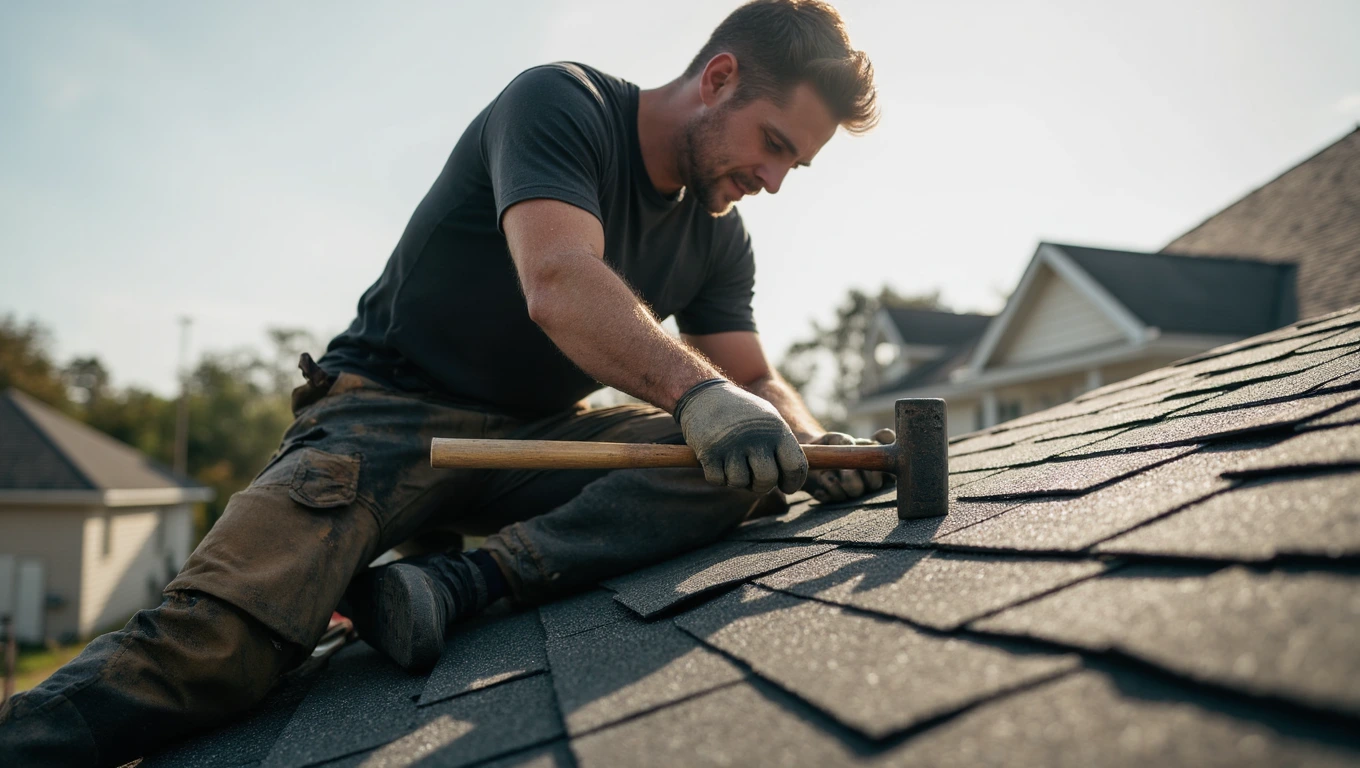
Residential Roof Repair Orlando
Residential roof repair is about protecting the place where people live. The repair plan should fit the home, roof type, leak history and visible condition—not simply match the latest roofing keyword.
Quick Answer: Residential Roof Repair in Orlando
Residential roof repair should solve the immediate roofing problem while considering how the whole house handles water. Leaks, missing shingles, cracked tile, flashing failures, ventilation issues, and storm damage can require different repair paths depending on the roof assembly and condition.
What are common residential roof repair problems?
Homeowners commonly encounter leaks, missing or damaged shingles, cracked or displaced tile, flashing failures, punctures, storm damage, and water-management issues.
Can one damaged area be repaired without replacing the whole roof?
Often, yes. A targeted repair can make sense when the issue is localized and the surrounding roof remains in serviceable condition.
When should a homeowner consider replacement instead?
Replacement becomes more relevant when damage or deterioration is widespread, the roof is near the end of its useful life, or repairs are recurring across multiple areas.
Why can a small roof leak become a larger home problem?
Water can move through roofing layers and building materials before becoming visible, so a small entry point may affect insulation, ceilings, framing, or finishes.
What should a homeowner do before the roofer arrives?
Document visible symptoms from a safe location, note when the problem appeared, reduce exposure to water inside the home, and avoid climbing onto a damaged roof.
Repair the roof problem without losing sight of the whole house
Residential roof repair is more than replacing whatever looks damaged from the driveway. A leak can begin at a flashing detail and travel before it reaches the living room. A cracked tile can be the visible symptom of an issue underneath. A few missing shingles can be isolated—or they can be the first sign that a larger roof section has been weakened by age and repeated weather exposure.
For Orlando homeowners, the useful repair conversation is therefore specific: what is wrong, where is it located, how much of the roof is affected, and what does the surrounding roof condition tell us? That approach keeps a small repair from becoming an unnecessary replacement while also avoiding repeated patches on a system that is no longer a strong candidate for spot repair.
The issues homeowners see most often
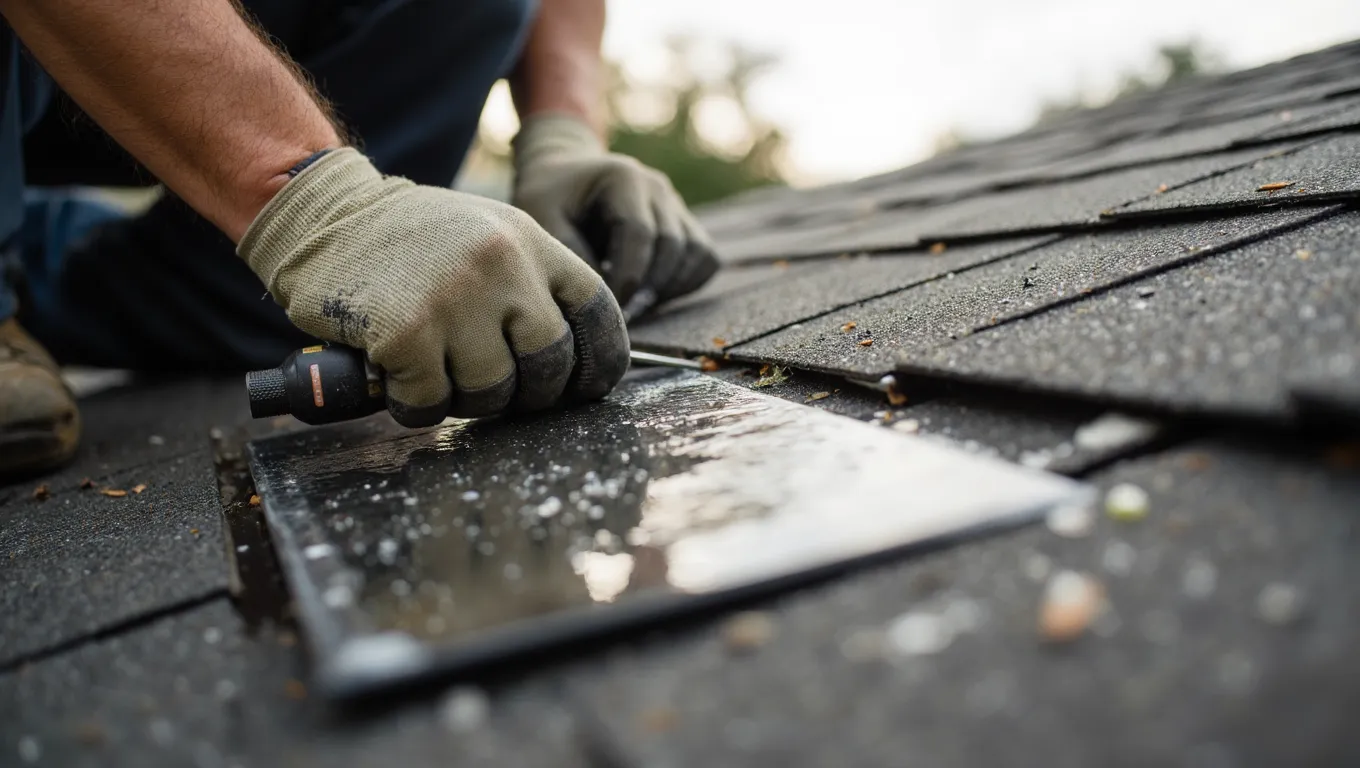
Shingle damage
Repair can address missing, cracked, curled or otherwise damaged shingles when the surrounding roof is in workable condition.
Tile damage
Broken or shifted clay and concrete tile may need replacement, reseating or related attention to the weatherproofing layers below.
Flashing failures
Water can enter around roof-to-wall transitions, valleys, vents, skylights and other joints even when the field roofing looks acceptable.
Pipe boots & penetrations
Roof penetrations are common leak points because seals and flashing details age differently from the surrounding roofing material.
Storm repairs
Wind, heavy rain and debris can create openings that need prompt stabilization or targeted replacement of damaged components.
Low-slope areas
Residential additions and sections with low slope may use membrane systems that require different repair techniques from steep-slope shingles or tile.
The repair method should match the roof system
Different roof materials fail in different ways. Shingles can crack, curl, lift or lose protective granules. Tile can break or move and expose underlying waterproofing. Metal roofing can develop fastener, seam or panel problems. Low-slope systems may develop membrane, seam or drainage issues.
That is why a residential repair should start with roof-type identification and then move to the specific failed component. When the issue falls inside a dedicated system, homeowners can also review the site’s shingle roof repair, tile roof repair, flat roof repair or metal roof repair pages for more specific service context.
Repair, stabilize, inspect or replace?
| Homeowner situation | Useful next step | What the decision depends on |
|---|---|---|
| One isolated leak | Targeted inspection and repair | Exact source, surrounding roof condition, recurrence history. |
| Active water during rain | Emergency leak response | Whether the leak is still active and if temporary stabilization is needed. |
| Recent storm damage | Post-storm inspection | Extent of wind or impact damage, exposed areas, hidden-condition indicators. |
| Older roof with repeated repairs | Replacement evaluation | Roof age, material condition, accumulated repairs and underlying assembly. |
What to do when you discover a roofing problem
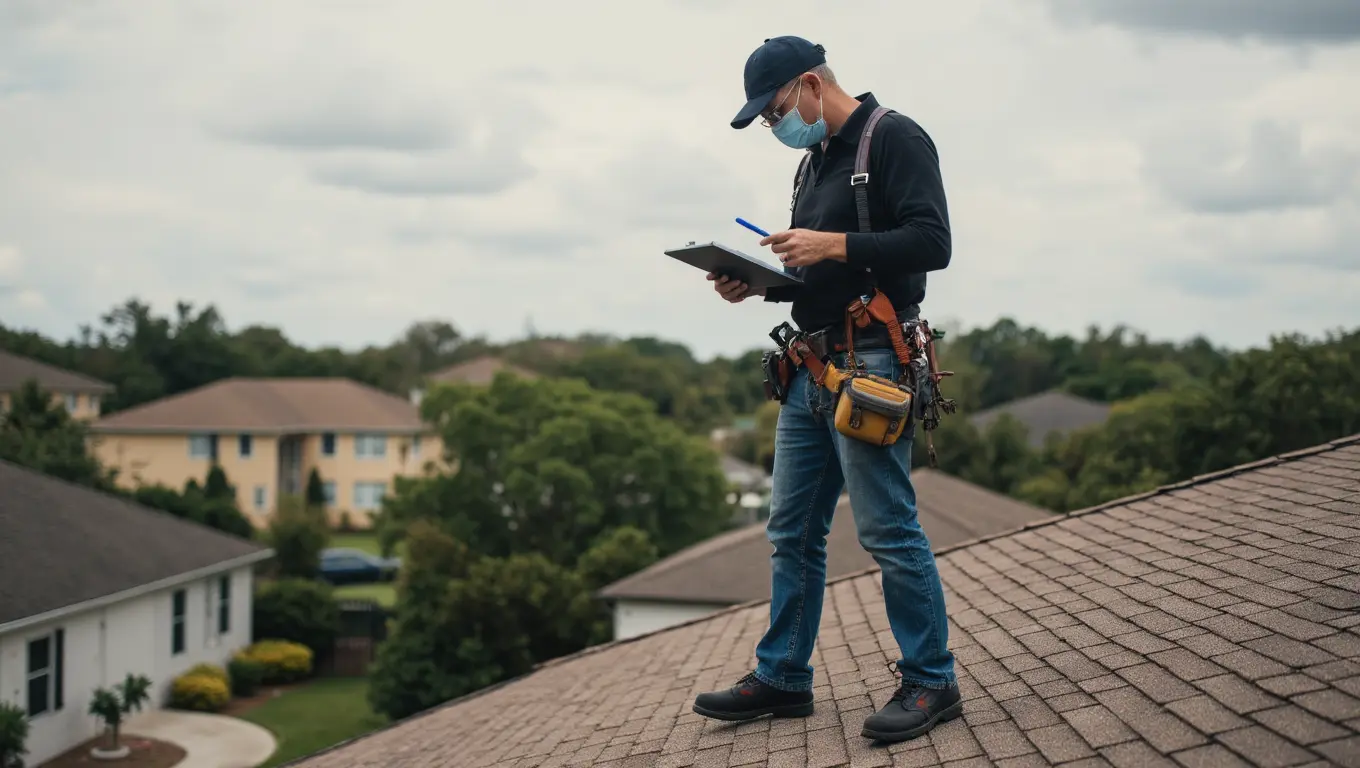
Document
Take safe photos of interior stains, visible exterior damage and any changes after rainfall.
Reduce exposure
Move valuables, use containers for drips, and avoid unsafe electrical or ceiling areas.
Get the source checked
Do not assume a stain’s location tells you which roof component has failed.
Residential roofs face more than one kind of wear
Homes in Orlando experience strong sun, heat, humidity, heavy rainfall and seasonal storms. These conditions can show up differently depending on the roof material and the home’s design. A repair should address the actual failure while preserving the parts of the roof that are still sound.
In neighborhoods across Orlando and Central Florida—including places such as Lake Nona, Baldwin Park, College Park and Conway—the useful approach is the same: assess the specific home rather than assume every community has identical roofing conditions. Local context matters, but the roof itself remains the source of truth.
Serving homeowners from Orlando
Roof Repair Orlando FL
6530 Swissco Dr #1117, Orlando, FL 32822
(689) 282-5370
contact@roofrepairorlandofl.com
A homeowner-friendly path from concern to completion
1
Describe the problem
Tell the roofing team where you see the leak, what happened recently, and what type of roof you have if known.
2
Inspect the roof
Assess the visible roofing system and likely failure points, including flashing and penetrations.
3
Explain the scope
Separate the immediate repair from conditions that may need additional attention later.
4
Complete the repair
Perform the approved work and review the finished condition and written warranty documentation.
Clear business information before you authorize work
Roofing license
Florida license CCC1327217.
Since 2001
The business has served Orlando and Central Florida since 2001.
Written warranty
Verified business information includes a 10-year written workmanship warranty.
Small roof problems can have a bigger path through the house
Homeowners often see the interior symptom first: a brown ceiling mark, damp insulation, a drip during a thunderstorm, or a wet wall after driving rain. The exterior roof may still look mostly normal. That is why residential roof repair should connect the visible symptom to the roof system rather than treating the stain itself as the repair location.
Roof type also changes the conversation. Shingle homes may need attention around valleys, ridge caps or pipe boots. Tile homes require care when replacing broken or displaced pieces and checking the waterproofing beneath them. Metal roofs may need work around seams or fasteners. A low-slope addition can behave differently from the home’s main pitched roof and may use a membrane system.
For homeowners comparing repair with replacement, the most useful factors are the extent of current damage, roof age, repair history and the condition of the surrounding roof. A targeted repair can protect a sound roof; repeated repairs on a deteriorating system may instead be a sign that a replacement evaluation deserves attention.
Before the roofer arrives
- Note where water appears inside
- Record recent rainfall or storm activity
- Take safe interior photos
- Tell the contractor about previous repairs
- Keep pets and people away from unsafe roof areas
- Have attic access information available if safe
Repair the failure while protecting the sound parts of the roof
One of the biggest homeowner concerns is whether a repair is going to turn into a much larger project. The right way to manage that uncertainty is to identify the failed component and evaluate the surrounding roof. A targeted repair is valuable when the broader system remains serviceable.
Home roofs often combine several details that age at different rates. Shingles may weather differently from flashing. A pipe boot can fail while the roof field still looks acceptable. Tile can crack without the owner knowing whether the underlayment beneath it has been affected. These differences are why a good residential repair begins with diagnosis.
Homeowners also need a practical plan for the interior. During a leak, move belongings, protect flooring and avoid unsafe electrical or ceiling areas. Once the roof condition is understood, the repair scope should make clear what will be fixed now and what, if anything, deserves future monitoring.
Questions to ask before authorizing work
- Where is the actual roof failure?
- How much of the surrounding area is affected?
- Is the repair intended to be permanent?
- Are underlayment or deck concerns visible?
- Would a replacement evaluation be more appropriate?
Common Residential Roof Repair Decisions
Homeowners usually want to know two things first: what is actually wrong with the roof, and whether the problem can be repaired without replacing the entire system. Residential roof repair works best when those questions are answered separately. A missing shingle, damaged flashing detail, failed pipe boot, cracked tile, or localized storm opening can call for a focused repair, while widespread deterioration can point toward a different path.
Different roof materials also change the repair approach. Asphalt and architectural shingles are repaired differently from concrete or clay tile, and metal roofing has its own seams, fasteners, penetrations, and panel interfaces. A flat or low-slope residential area may need attention to membrane-like materials, drainage, or transitions that are not present on a conventional pitched roof.
After an Orlando storm, a homeowner may notice the first symptom inside the house, but the visible ceiling mark is not always the roof source. Water can travel before it appears, and a repair that addresses only the indoor symptom will not solve the exterior failure. A roof inspection can help determine whether the issue is isolated or whether other components need attention at the same time.
Good residential repair communication should also set expectations about scope. The written estimate should explain the observed problem, the proposed repair, and any condition that could change the scope once the roof is opened or better inspected. This keeps the homeowner’s decision focused on the actual condition of the roof rather than on a one-size-fits-all repair recommendation.
RELATED ORLANDO ROOFING RESOURCES
Connect the Next Step to the Right Roofing Service
Use the related pages below to move from the information on this page to the service that matches the roof condition or project decision.
Roof Leak RepairTrace active leaks and match the repair to the failed component.Shingle Roof RepairExplore asphalt shingle repair and storm-damage considerations.Tile Roof RepairReview cracked, displaced, and weathered tile repair considerations.Roof InspectionStart with an evidence-based condition assessment before choosing a solution.
Residential Roof Repair FAQ
What residential roof repairs do you handle?
Residential problems can include active leaks, missing shingles, cracked or displaced tile, flashing failures, pipe-boot issues, storm damage and other localized roof-system repairs.
Can you repair shingle, tile and metal roofs?
The service covers major residential roof types, with the exact repair scope determined by the roof material and condition.
Is this service only for single-family homes?
The page focuses on residential properties and homeowner roofing needs. The repair method depends on the building and its roof assembly.
When is a residential leak an emergency?
An active leak, exposed decking, significant storm opening or rapidly worsening water intrusion should be treated as urgent rather than routine maintenance.
How do I choose between repair and replacement?
Consider damage extent, roof age, repair history and surrounding roof condition. An inspection can help distinguish a localized defect from a broader system problem.
Do you inspect before repairing?
Inspection is the basis for diagnosing the cause and determining the appropriate scope. The result can be a written estimate for the recommended work.
What about low-slope sections on a house?
Some residential additions use low-slope membrane systems. Those areas can require different repair methods from the home’s main shingle or tile roof.
Can localized storm damage be repaired without replacing the whole roof?
Yes, when the damage is limited and the rest of the roof remains serviceable. Broader damage may change the decision.
Are written estimates available?
Yes. The verified business information includes written estimates so homeowners can review the proposed scope before authorizing work.
Is residential repair covered by a workmanship warranty?
The business provides a written 10-year workmanship warranty according to the verified site information. Review the written warranty for the exact project coverage.
Good residential roof repair answers the questions homeowners actually have
Most homeowners are not trying to become roofing experts. They want to know whether water will come back, whether the damaged area is larger than it appears, and whether today’s repair is likely to lead to another call next season. A clear repair process addresses those concerns directly.
Start with the source. If the leak is caused by a pipe boot, flashing joint, valley, damaged shingle or broken tile, the repair scope should name that component. Then consider the surrounding condition. A single failed detail on an otherwise serviceable roof is a different situation from a failed detail surrounded by widespread aging or repeated repairs.
Homeowners should also understand what is not part of the roof repair. Interior drywall, paint, insulation replacement or unrelated building work may require separate evaluation. Keeping the roof scope and building-restoration scope distinct makes estimates easier to understand.
What a homeowner should expect to receive
- A clear description of the roof issue
- Recommended repair scope
- Written estimate before authorized work
- Explanation of limitations or uncertain conditions
- Applicable written workmanship warranty
Repair the failure while protecting the sound parts of the roof
One of the biggest homeowner concerns is whether a repair is going to turn into a much larger project. The right way to manage that uncertainty is to identify the failed component and evaluate the surrounding roof. A targeted repair is valuable when the broader system remains serviceable.
Home roofs often combine several details that age at different rates. Shingles may weather differently from flashing. A pipe boot can fail while the roof field still looks acceptable. Tile can crack without the owner knowing whether the underlayment beneath it has been affected. These differences are why a good residential repair begins with diagnosis.
Homeowners also need a practical plan for the interior. During a leak, move belongings, protect flooring and avoid unsafe electrical or ceiling areas. Once the roof condition is understood, the repair scope should make clear what will be fixed now and what, if anything, deserves future monitoring.
Questions to ask before authorizing work
- Where is the actual roof failure?
- How much of the surrounding area is affected?
- Is the repair intended to be permanent?
- Are underlayment or deck concerns visible?
- Would a replacement evaluation be more appropriate?
More Ways We Help Orlando Homeowners
Depending on what your inspection turns up, one of these related residential services may be the right next step.
Roof RepairEmergency Roof Leak RepairEmergency Roof RepairRoof InspectionRoof ReplacementShingle Roof RepairTile Roof RepairFlat Roof Repair
Talk to a Local Roofer About Your Home
Roof Repair Orlando FL has served Orlando and Central Florida since 2001. Call (689) 282-5370 or request a written estimate. Our verified business address is 6530 Swissco Dr #1117, Orlando, FL 32822.
Request a Free EstimateCall (689) 282-5370View Us on Google MapsRoof Repair Orlando FL · (689) 282-5370 · contact@roofrepairorlandofl.com · FL License CCC1327217
Find Roof Repair Orlando FL
Our business address is 6530 Swissco Dr #1117, Orlando, FL 32822. Use the map to confirm the location and get directions.
View Us on Google MapsCall (689) 282-5370
Florida License CCC1327217 · Serving Orlando & Central Florida · contact@roofrepairorlandofl.com
Residential Roof Repair in Orlando Should Protect the Whole Home
A residential roofing problem can affect more than the roof covering. Water entry can reach ceilings, insulation, drywall, framing or personal property, while a small exterior defect may reflect an issue around a penetration, flashing detail or drainage path.
Document safely
Photograph visible conditions from the ground and note when leaks or new damage appear.
Find the source
Do not assume an interior stain sits directly under the roof defect. A roof leak assessment follows the likely water pathway.
Choose the right scope
Use inspection findings to decide between localized repair, broader repair or replacement assessment.
Different Residential Roofs Need Different Repair Thinking
| Roof system | Common repair focus | Decision question |
|---|---|---|
| Shingle | Missing/damaged shingles, flashing, valleys, ridge caps | Is the damage localized or does surrounding deterioration change the scope? |
| Tile | Cracked/displaced tiles, underlayment, flashing | Is visible tile damage masking a broader leak pathway? |
| Metal | Fasteners, seams, flashing, movement, corrosion | Is the issue a component defect or a broader system problem? |
| Low-slope | Membrane, seams, drainage, penetrations | Is water movement contributing to a recurring leak? |
Homeowner Checklist Before a Roofer Arrives
Residential Roof Repair Should Protect the Whole Property
A home roof problem is rarely only about the roof surface. A water-entry pathway can affect ceilings, insulation, drywall, framing and personal property. A storm-damaged covering can also expose the building to the next rainfall.
Describe the symptom
Note when the leak, stain or visible roof damage appeared and whether it follows weather.
Know the system
Shingle, tile, metal and low-slope residential roofs need different repair methods.
Keep the scope clear
Ask what roof component failed, what area is included and why broader work is or is not being recommended.
How Roof Type Changes the Repair Question
| System | Important repair areas | Question to ask |
|---|---|---|
| Shingle | Shingles, valleys, flashing, ridge caps | Is the visible damage localized or part of broader wear? |
| Tile | Tile, underlayment, flashing, ridge/hip details | Is the visible broken tile the whole problem? |
| Metal | Panels, seams, fasteners, flashing | Is the issue a component defect or a broader panel problem? |
| Low-slope | Membrane, drains, seams, penetrations | Is drainage or a penetration contributing to the leak? |
What to Have Ready Before the Roofing Visit
The goal is not to diagnose the roof yourself. The goal is to give the inspector better context and keep the assessment focused.
Homeowner Questions
Can one roof leak be repaired without replacing the whole roof?
Often, when the leak source is localized and the surrounding roof remains serviceable.
Should I call a roofer for a ceiling stain?
A ceiling stain can indicate water intrusion and is worth investigating, especially after rainfall.
Do you repair shingle and tile roofs?
Yes. Service coverage includes shingle and tile repair with system-specific assessment.
What should I do after storm damage?
Document what is safely visible, check for active water entry and request a post-storm inspection.
Does City of Orlando require a permit for residential roof work?
The city states that residential roof repair or replacement requires a building permit within its jurisdiction. Verify the specific project requirements.
When should I consider replacement?
Replacement becomes more relevant when deterioration is widespread or repairs are recurring and no longer practical.
Residential Roof Repair: Protect the Home While the Roof Is Being Diagnosed
Homeowners sometimes focus on the room where water appears, but the roof repair process needs to follow the water pathway. Protect the interior where safe, keep people away from active hazards and give the roofing professional enough context to understand when and where the problem starts.
Before the inspection
Note the first visible symptom, weather conditions and any previous repair at the same location.
During the assessment
Ask which roof component failed and whether the surrounding roof was inspected.
After repair
Keep photographs, scope and invoice and monitor the repaired area during later rainfall.
Homeowner decision points
- Is the damage localized?
- Does the surrounding roof remain serviceable?
- Has the same leak returned after earlier repair?
- Is the roof system shingle, tile, metal or low-slope?
- Are flashing or penetration details involved?
- What exact area is included in the written repair scope?
Residential Roof Repair Decision Guide
Homeowners often need to make a decision while dealing with incomplete information. A roof repair page should therefore make the decision process simple: identify the symptom, inspect the roof system, determine the repair boundary and compare the result with the overall condition of the roof.
Localized defect
One damaged component on a serviceable roof can be a repair situation.
Recurring problem
Repeated leaks or repairs can indicate that the visible defect is not the whole roof problem.
Broad deterioration
Widespread deterioration can move the discussion toward replacement planning.
Homeowner questions before authorizing work
Ask which roof component failed, what evidence supports that conclusion, how much of the roof is included, what adjacent components were checked, and what could cause the scope to change. A clear answer should be tied to the property-specific inspection rather than a generic sales script.
For roof work inside City of Orlando jurisdiction, use the city’s permit guidance for the specific project. Outside the city, confirm the requirements with the applicable authority having jurisdiction.
Residential Storm and Leak Preparation
Before a storm, homeowners can reduce confusion by knowing where the roof access points are, keeping roof documents together and knowing how to safely observe the exterior from the ground. After a storm, the priority is documenting visible changes and checking for interior water entry rather than climbing a wet roof.
For active leaks, protect the interior where safe and request professional assessment. The repair page should remain condition-led: the presence of one stain does not automatically mean the entire roof needs replacement.
Residential Roof Repair: Questions That Improve the Scope
Homeowners can improve the quality of a roofing conversation by asking for the failed component, the repair boundary, the surrounding condition and the reason replacement is or is not being considered. The more specific the answer, the easier it is to compare the scope with the actual roof problem.
- What component is failing?
- What evidence supports the diagnosis?
- What surrounding areas were checked?
- Is the repair localized?
- What could make the scope change?
Residential Roof Repair FAQs
Do you inspect the roof before recommending repair?
A property-specific assessment should identify the problem and repair boundary before major work is recommended.
Can a ceiling stain be caused by a roof defect elsewhere?
Yes. Water can travel before appearing inside, so the stain is not always directly beneath the entry point.
What roof systems do residential repair pages cover?
Service coverage includes shingles, tile, metal and low-slope areas where applicable.
What should I keep after a roof repair?
Keep the written scope, photographs, invoice and any inspection or warranty documentation.
Can storm damage be repaired without replacement?
Localized damage on a serviceable roof may be repairable; widespread damage can change the decision.
How can I prepare for a roofing visit?
Record when the problem appeared, recent weather, prior repairs and any interior water evidence.