Shingles and ridge caps
Wind can lift or remove shingles and disturb ridge caps. Missing pieces expose the roof assembly to rain and can create a larger opening when the next storm passes through.
Storm damage is more than what you can see from the ground. Wind can lift roofing materials, damage flashing and expose water-shedding layers before the first interior stain appears. This page focuses on post-storm assessment, stabilization, documentation and repair.
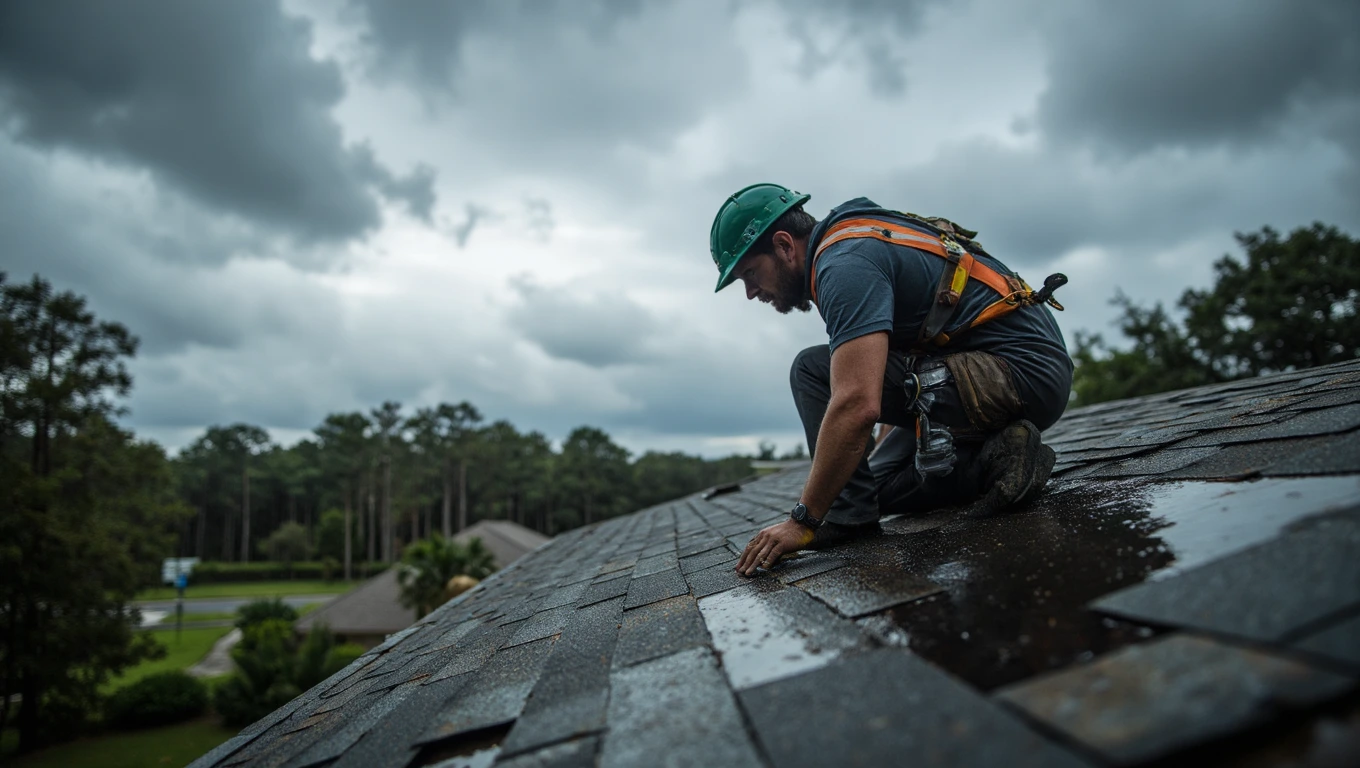
Storm damage repair starts with a different question than routine roof maintenance: what changed because of the weather event? Wind may disturb shingle edges, ridge caps, tile, metal components, flashing, and roof penetrations. Rain then tests every opening and weak point. The result can be anything from a clearly exposed deck to a subtle failure that only reveals itself during the next rainfall.
For Orlando and Central Florida properties, a post-storm roof assessment should document what is visible and distinguish likely storm-related damage from pre-existing wear. That distinction matters for repair planning and for clear insurance documentation. A contractor should not promise claim approval; the useful deliverable is an accurate record of observed conditions and a repair scope based on the roof itself.
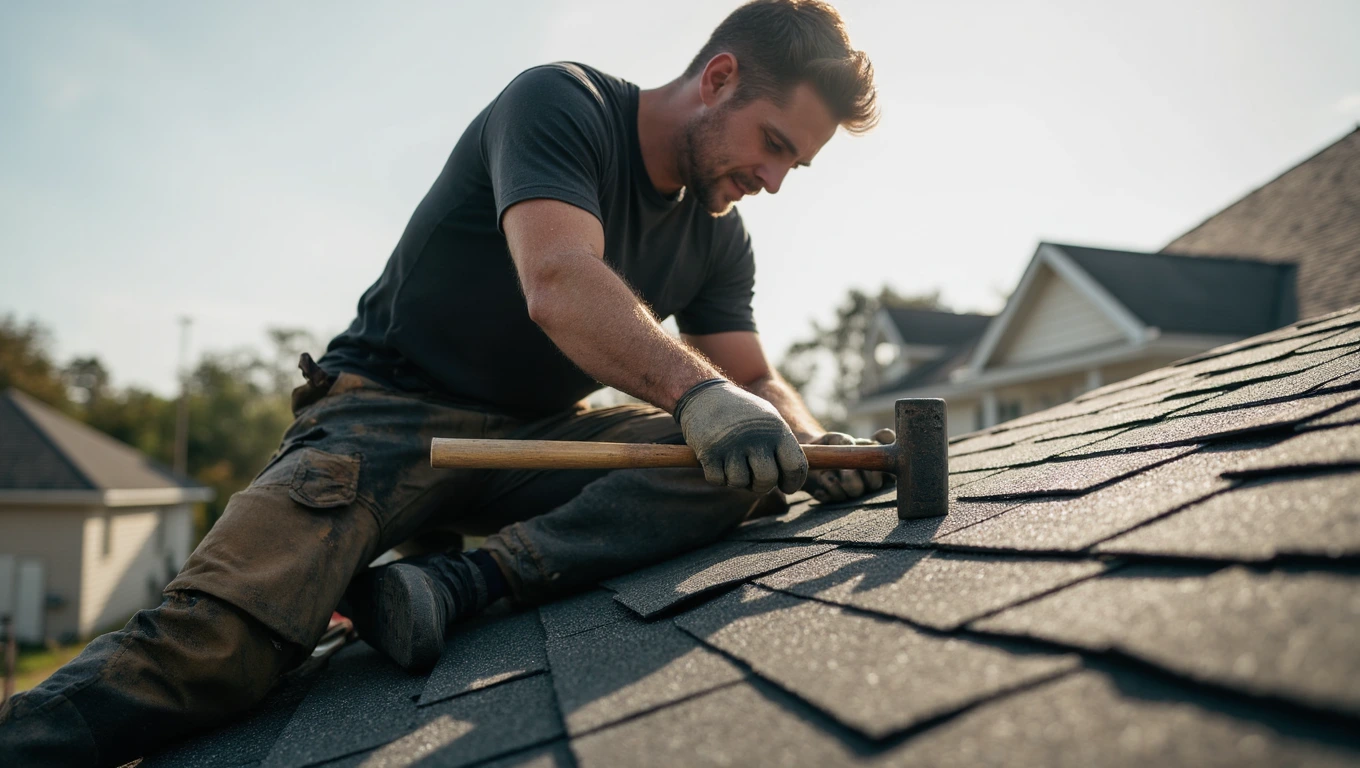
Wind can lift or remove shingles and disturb ridge caps. Missing pieces expose the roof assembly to rain and can create a larger opening when the next storm passes through.
Clay and concrete tiles can crack, shift, or lose support after wind or impact. A few visibly broken pieces may coexist with damage to the weatherproofing layers below.
Joints around vents, walls, skylights, and other penetrations can loosen or distort under wind and water. These details deserve inspection even when the main roof surface looks stable.
When the outer roof covering is displaced, the underlayment becomes part of the weather barrier. Its condition and exposure should be documented before permanent work is planned.
An open or visible deck is a higher-priority condition because the building envelope has lost a major protective layer and additional rainfall can worsen interior impact.
Falling branches or debris can puncture the surface, break tile, bend metal, or damage underlying structure. Safe assessment matters before any cleanup or repair is attempted.
A useful storm inspection looks at the roof as an assembly, not just a collection of surface defects. The roof covering, flashing, underlayment, deck, penetrations, and drainage details work together. A damaged outer layer may also expose or compromise the components beneath it.
For shingle roofs, the inspection should consider missing or lifted shingles, ridge caps, valleys, flashing, and nearby fastener or attachment areas. Tile roofs need an eye for cracked or displaced pieces and the waterproofing beneath them. Low-slope commercial systems may require attention to seams, membrane integrity, drains, penetrations, and areas where ponding has occurred.
Observed roof damage, photographs, affected components, and the recommended repair scope can create a clearer record for your insurer. The contractor's role is to describe the roofing condition accurately.
Coverage, deductibles, depreciation, and claim approval are insurance decisions. Documentation can support a claim, but no roofing contractor should guarantee the result of an insurance review.
For a storm-related roof issue, keep copies of photographs, receipts for authorized mitigation, and written inspection information in one place.
Florida's official Atlantic hurricane season runs from June through November, but strong thunderstorms and heavy rainfall also occur outside that window. That means the roof is exposed to repeated weather stress rather than one annual event. A roof with aging shingles, tired flashing, or compromised tile may handle ordinary days but fail when wind and rain arrive together.
That is why post-storm decisions should focus on current roof condition. A targeted repair can be appropriate when damage is limited. A replacement discussion becomes more relevant when the event reveals widespread deterioration, repeated repair history, structural concerns, or an older roof that is no longer a good candidate for isolated patching. The roof inspection service provides the assessment path; the roof replacement page covers the larger installation decision.
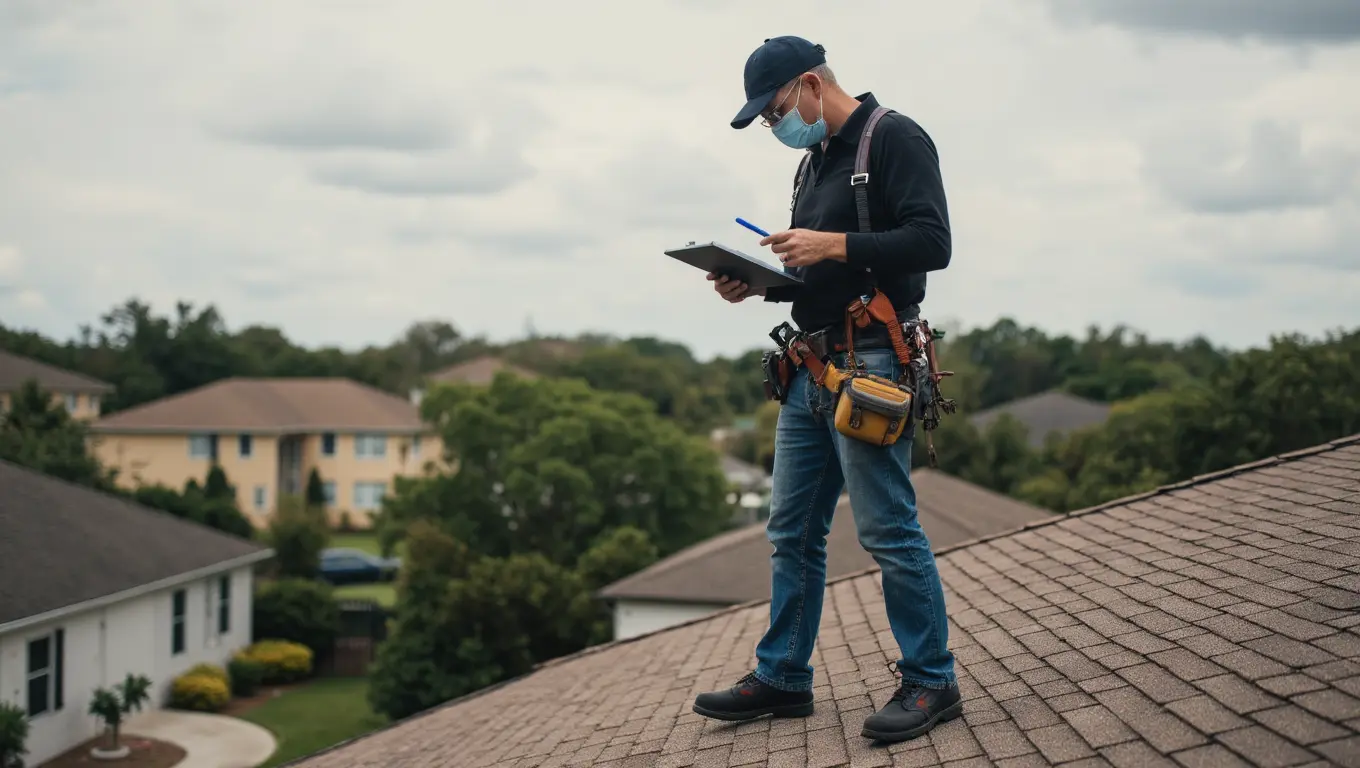
Capture exterior damage from the ground and document any interior ceiling or wall effects.
Move belongings away from water and avoid unsafe attic or electrical areas.
When necessary, arrange tarping or another temporary measure to reduce additional intrusion.
Use a post-storm inspection to determine whether the damage is isolated, systemic, or still uncertain.
Do not let the urgency of the storm turn into a rushed replacement decision without understanding the roof's overall condition.
| Finding | Repair may fit when… | Replacement deserves consideration when… |
|---|---|---|
| Missing shingles | Damage is limited and the surrounding roof remains in sound condition. | Storm damage is widespread or the roof is already showing significant age and deterioration. |
| Broken tile | Cracks or displacement are localized and the supporting system remains serviceable. | Multiple areas show damage or the waterproofing assembly has broader problems. |
| Flashing failure | The detail can be properly rebuilt or resealed. | Repeated failures reveal wider installation or roof-system concerns. |
| Exposed deck | The opening is limited and the rest of the roof is stable. | Decking and roof components show widespread damage or repeated water intrusion. |
A post-storm inspection should not treat every roof surface the same way. Asphalt shingles can show lifted tabs, missing pieces, damaged ridge areas, or signs that wind reached the attachment points. Tile roofs may show isolated cracks, displacement, or fragments while the underlayment beneath the tile remains the larger concern. Metal roofs can develop movement at panels, seams, fasteners, clips, or edge details.
Low-slope commercial roofs create another inspection pattern. Wind and rain may expose membrane seams, flashing transitions, penetrations, drains, and edge details. Damage can be less dramatic visually than a missing shingle field, yet still result in water entry during the next rainfall.
This material-specific approach is important when deciding whether the right response is temporary stabilization, a targeted repair, a broader roof assessment, or replacement planning. It also produces clearer documentation because the written scope can identify the affected roofing components instead of relying on a generic description such as “storm damage.”
A storm inspection should create a before-and-after picture of the roof. That means documenting changed conditions and separating them from ordinary aging or previously existing issues. The distinction is useful both for repair planning and for keeping insurance documentation factual.
The inspection should also follow the roof system. On shingles, attention belongs on lifted or missing materials, ridge caps, valleys and flashing. On tile, broken or displaced pieces can expose the layers beneath. On low-slope commercial roofs, seams, penetrations, drains and membrane edges become important. The same weather event can therefore produce very different roof failures.
Good storm documentation is specific. Instead of saying only “roof damaged by storm,” the written scope can identify the affected component and visible condition. That helps the owner understand what needs immediate attention and what can be evaluated as part of a longer repair or replacement decision.
A useful storm assessment separates obvious impact from less visible wind and water exposure. Missing shingles and broken tiles are easy to notice, but wind can also loosen attachments, lift edges, affect ridge caps, disturb flashing, or compromise roof penetrations without leaving a dramatic opening. On low-slope roofs, membrane seams, perimeter details, drains, and rooftop penetrations can deserve closer attention after severe weather.
Storm damage can also develop in stages. A roof may remain dry immediately after a wind event and then leak during the next period of sustained rain. Water can enter at a damaged area and travel through underlayment or roof deck before it becomes visible inside. For that reason, a post-storm inspection is useful even when interior signs are limited, particularly when there is visible displacement or debris impact from the ground.
Documentation should describe conditions rather than predict an insurance outcome. Photographs, dates, affected roof areas, visible openings, damaged components, and the recommended scope can create a clearer record for the property owner and insurer. Coverage remains a policy and carrier decision. A roofing assessment can document what was observed and what work appears necessary without guaranteeing claim approval.
Orlando properties can include shingle, tile, metal, and low-slope systems, so the correct post-storm response depends on the roof that is actually on the building. The practical goal is to stabilize unsafe or exposed areas, identify the storm-related scope, and decide whether localized repair or a broader replacement evaluation is warranted.
For an Orlando property owner searching for storm damage roof repair Orlando, the first priority is to establish whether the weather event changed the roof’s ability to shed water safely. The assessment should separate storm-caused damage from pre-existing wear so the recommended scope remains clear.
From the ground, look for missing shingles, displaced or cracked tile, damaged ridge caps, loose flashing, debris impact, exposed underlayment and new interior stains. Avoid climbing a storm-damaged roof.
Yes. Wind uplift, displaced materials and flashing damage can weaken the water-shedding system without producing a visible interior symptom until the next rainfall.
Wind uplift occurs when air pressure gets beneath or acts on exposed roofing components, causing materials or attachments to lift, shift or lose their weather-tight seal.
Temporary tarping may be used for open or exposed areas that need protection before permanent repair. The proper stabilization method depends on site conditions and roof construction.
Yes, where appropriate, a contractor can provide dated photographs, written observations and a repair scope. The insurer remains responsible for coverage decisions.
Consider the amount of damage, the age and condition of the roof, repair history and the underlying assembly. A storm inspection should separate isolated damage from broader deterioration.
Yes. Wind can affect flashing, ridge caps, attachments and individual areas without creating a dramatic overall roof appearance. A closer inspection can identify localized damage.
Water can take time to travel through roofing and framing before reaching an interior surface. Additional rain can make a small opening suddenly visible inside the property.
Yes. Commercial assessments can include membrane seams, penetrations, drains, flashing, rooftop equipment interfaces and other low-slope components.
As soon as practical after significant wind, heavy rain, debris impact or a hurricane event, particularly if the property shows visible damage or an interior leak.
Post-storm roofing decisions can feel urgent, but the most useful first step is to organize the evidence. Start with the roof areas that are visibly open or displaced, then look for interior symptoms and note the timing. A missing shingle or broken tile matters because it changes the roof's weather protection, while a ceiling stain tells you that water has already crossed into the building envelope.
After a large weather event, some owners assume every roof condition was caused by the storm. A careful inspection should avoid that assumption. It can distinguish fresh displacement or impact from older deterioration, prior repairs, or general aging. That distinction makes the written repair scope more useful and keeps insurance documentation factual.
The repair sequence also depends on what the storm actually did. A small opening may need a targeted repair. A larger exposed section may require tarping before rain returns. Widespread damage combined with an older roof may lead to a replacement discussion. The point is to move from weather event to current roof condition, not from weather event directly to a predetermined service.
A storm inspection should create a before-and-after picture of the roof. That means documenting changed conditions and separating them from ordinary aging or previously existing issues. The distinction is useful both for repair planning and for keeping insurance documentation factual.
The inspection should also follow the roof system. On shingles, attention belongs on lifted or missing materials, ridge caps, valleys and flashing. On tile, broken or displaced pieces can expose the layers beneath. On low-slope commercial roofs, seams, penetrations, drains and membrane edges become important. The same weather event can therefore produce very different roof failures.
Good storm documentation is specific. Instead of saying only “roof damaged by storm,” the written scope can identify the affected component and visible condition. That helps the owner understand what needs immediate attention and what can be evaluated as part of a longer repair or replacement decision.
Once storm damage has been documented, these related pages cover the repair, inspection and replacement paths that typically follow.
Roof Repair Orlando FL has served Orlando and Central Florida since 2001. Call (689) 282-5370 or request a written estimate. Our verified business address is 6530 Swissco Dr #1117, Orlando, FL 32822.
Our business address is 6530 Swissco Dr #1117, Orlando, FL 32822. Use the map to confirm the location and get directions.
Florida License CCC1327217 · Serving Orlando & Central Florida · contact@roofrepairorlandofl.com
This service is relevant to properties in communities such as Lake Nona roof repair, Pine Hills roof repair, Wedgefield roof repair, Sanford roof repair and Apopka roof repair.