Flat Roof Repair Orlando FL
A low-slope roof works through controlled drainage across a membrane or other continuous roof surface. Water travels toward drains or scuppers, while seams, flashing, penetrations and edge details have to remain watertight. Flat roof repair Orlando FL therefore requires a different diagnostic approach from steep-slope shingles or tile. An interior leak does not necessarily point directly to the membrane defect. Moisture can migrate through insulation, substrate or framing before it becomes visi
Flat and Low-Slope Roofs Need Water-Flow Diagnosis
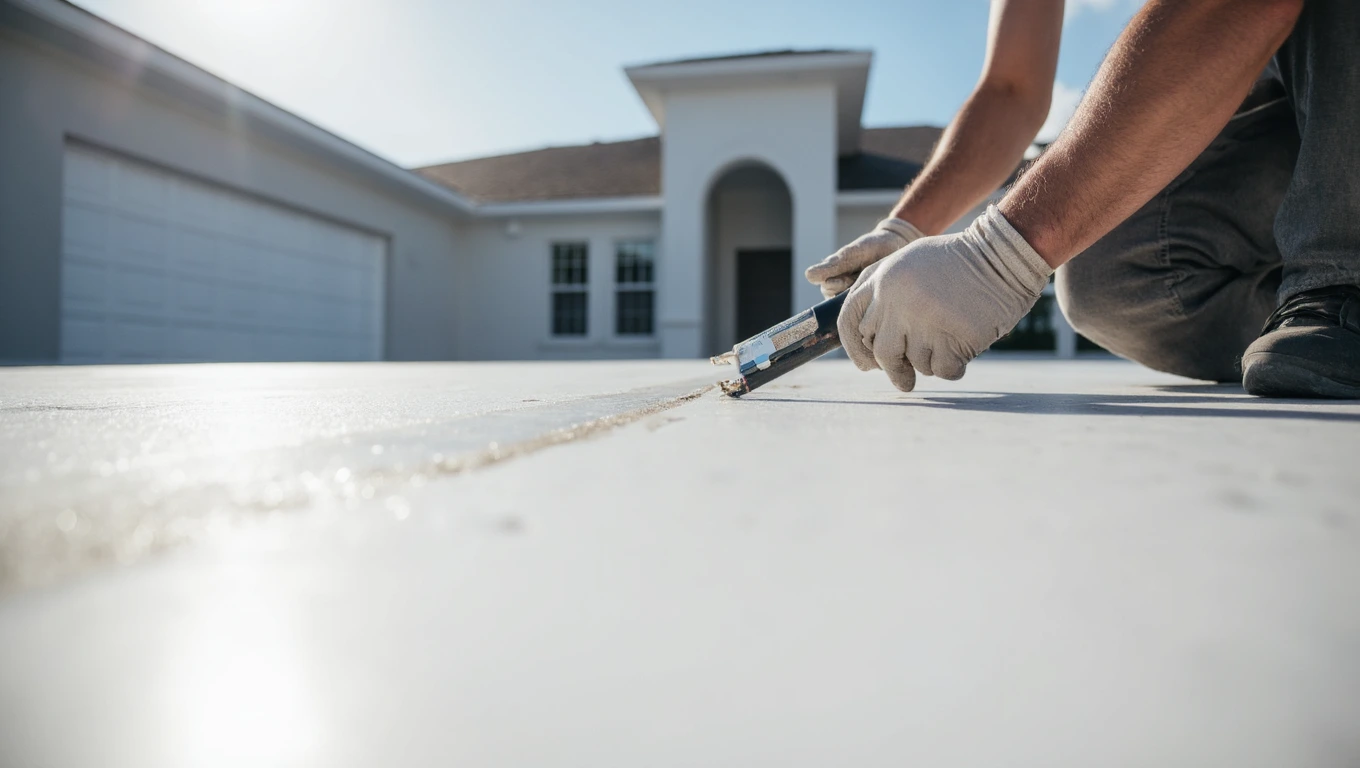
A low-slope roof works through controlled drainage across a membrane or other continuous roof surface. Water travels toward drains or scuppers, while seams, flashing, penetrations and edge details have to remain watertight. Flat roof repair Orlando FL therefore requires a different diagnostic approach from steep-slope shingles or tile.
An interior leak does not necessarily point directly to the membrane defect. Moisture can migrate through insulation, substrate or framing before it becomes visible. Good diagnosis combines roof-surface observations with the building's interior symptoms. When the source of the moisture is unclear, a roof leak repair assessment can help trace the water path before a patch is chosen.
Know the Membrane Before Repairing It
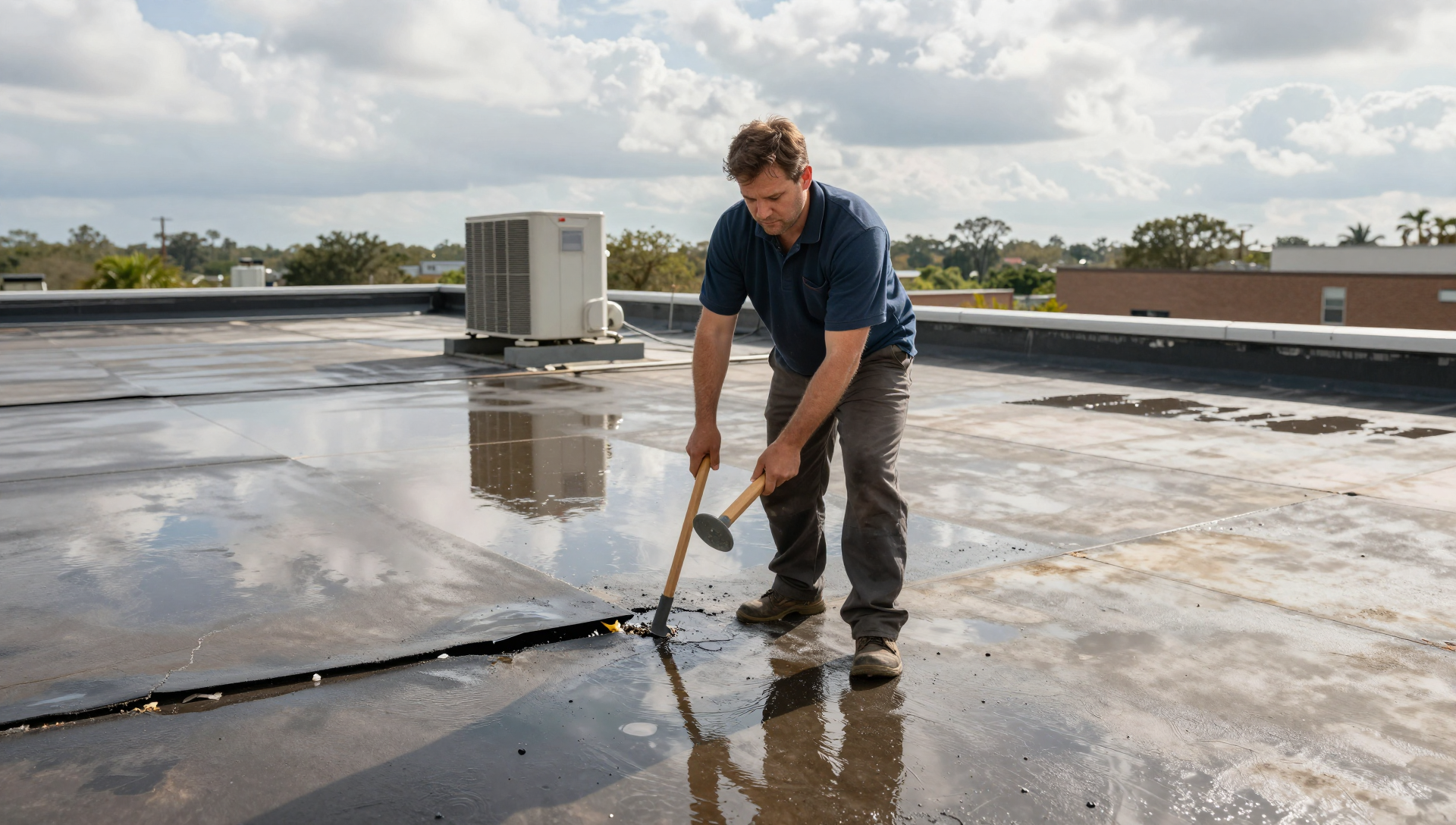
TPO, EPDM and modified bitumen systems are not interchangeable. Each uses different materials and repair practices, so the first step is identifying what is installed. A patch or sealant selected without considering the membrane can create compatibility problems or a temporary result.
The repair scope should name the system where it is known and explain which component is actually failing. This keeps a flat-roof repair focused on the installed assembly rather than on a generic leak patch.
Roof-system checkpoints
- Membrane type
- Seams
- Drains and scuppers
- Penetrations
Seam Separation and Membrane Punctures
Seams are critical because they join membrane sections into one water-shedding surface. Separation can develop from age, installation issues, movement or deterioration. Punctures can result from maintenance activity, foot traffic, dropped objects or storm debris. After a severe weather event, checking for storm and hurricane damage is useful even when interior staining is limited.
The surrounding membrane should be checked because a defect in one location can coexist with broader aging. A localized patch makes sense when the surrounding system remains serviceable; widespread membrane deterioration changes the repair-versus-replacement decision.
Drains, Scuppers and Ponding Water
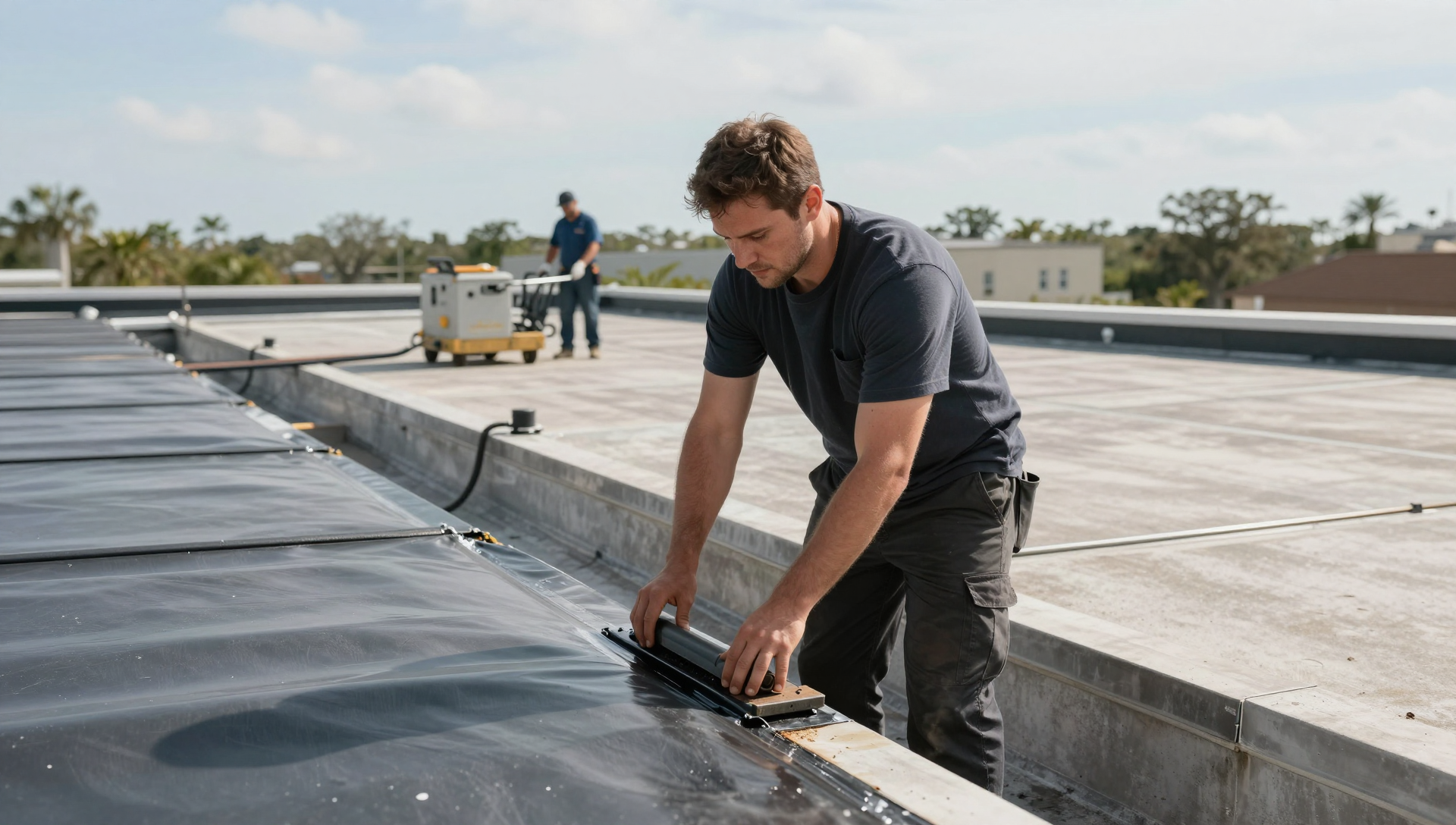
Drainage is a core part of flat-roof performance. Roof drains and scuppers need to remain clear and functional. Ponding can be related to blocked drainage, low areas, settlement, design conditions or other roof-surface factors. If drainage or membrane conditions are uncertain, a professional roof inspection can separate a localized defect from a broader system issue.
Clearing a drain may solve one problem but not a recurring low area. The inspection should distinguish a maintenance issue from a roof-system issue so the repair does not address only the symptom.
Flashing at Walls, Curbs and Edges
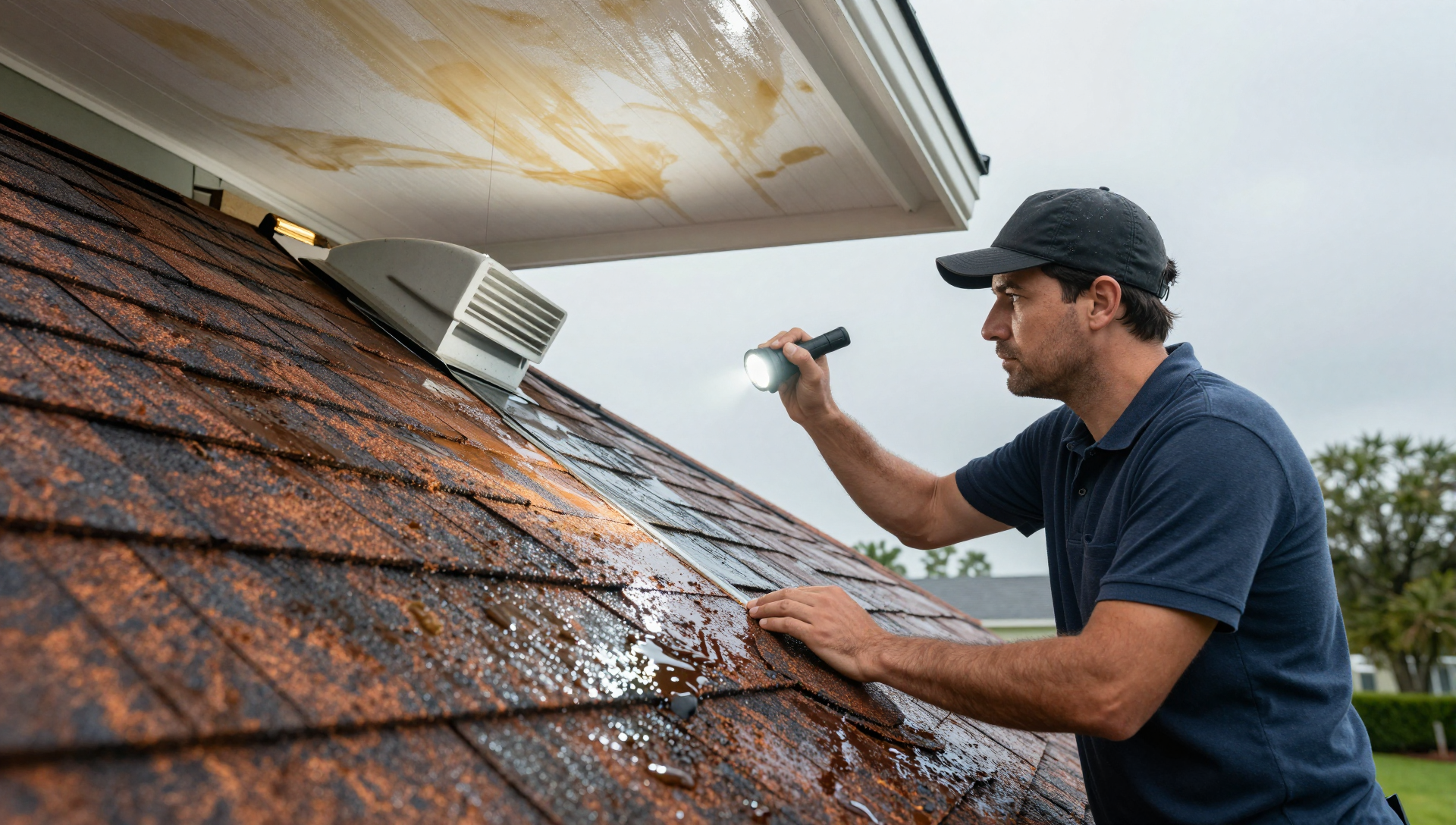
Flat roofs have numerous transitions around walls, HVAC curbs, vents, skylights and roof edges. Flashing protects these transitions, and failures can allow water behind or beneath the membrane.
When a leak appears near equipment or a wall, the inspection should consider the entire transition. Resealing one visible joint without checking the adjacent flashing geometry may leave the water path intact.
Roof-system checkpoints
- Membrane type
- Seams
- Drains and scuppers
- Penetrations
Penetrations and Equipment Service Areas
Rooftop penetrations create potential leak points. So do areas where technicians regularly access equipment. Foot traffic can damage membranes, and repeated service work can stress sealants or flashing around curbs and pipes.
A practical maintenance approach coordinates rooftop service with roof protection. Where a leak is recurring around equipment, the diagnosis should separate the equipment itself from the roof penetration or flashing detail. When deterioration extends across the system, roof replacement may need to be considered alongside targeted repairs.

Moisture Beneath the Membrane
Some flat-roof failures extend beyond the top membrane. Moisture can affect insulation or deck materials and may remain hidden until a larger area becomes saturated. Surface softness, staining or other clues can suggest a deeper issue, but not every condition is directly visible.
A clear inspection report should state what was observed and what remains inaccessible. That creates a more useful basis for deciding between localized repair, section work or replacement.
Commercial Flat Roofs and Residential Low-Slope Areas
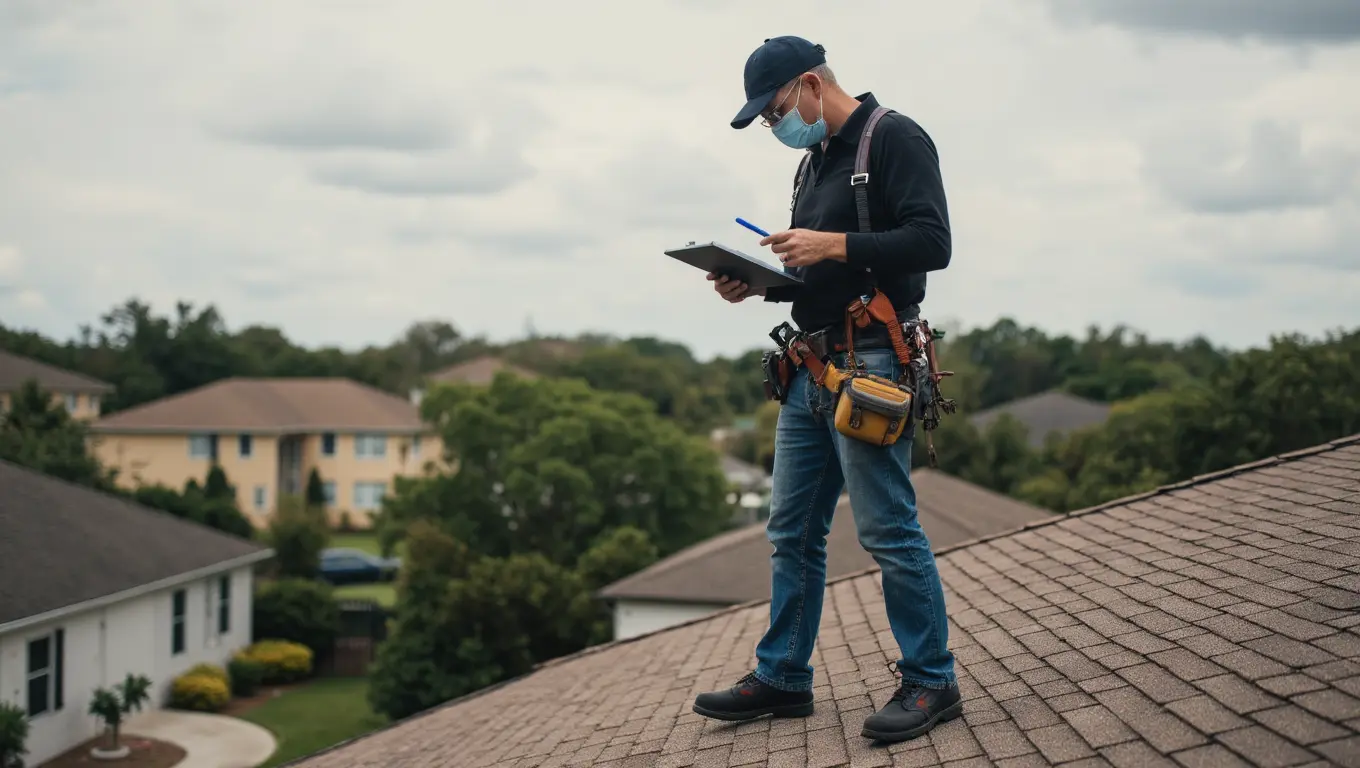
Commercial properties may have large membrane roofs with several drains, penetrations and service paths. Residential low-slope sections can appear on additions, porches or specific building sections. The scale differs, but the same fundamentals apply: identify the membrane, trace water, inspect transitions and verify drainage.
commercial flat roof repair Orlando is broader property intent; this page remains focused on the flat or low-slope system itself. Urgent active water intrusion may require emergency roof leak repair before a full repair scope is finalized.
Roof-system checkpoints
- Membrane type
- Seams
- Drains and scuppers
- Penetrations
Florida Heat, Rain and UV Exposure
Central Florida combines strong sun with heavy seasonal rainfall. Those conditions can age membrane surfaces, flashing materials and sealants while repeated rain tests drainage paths. Storms may also introduce debris or impact damage. Roofing conditions in communities such as Lake Nona are evaluated within the same Orlando-area service network.
Local weather is part of the reason regular observation matters, especially around drains, penetrations and areas with heavy service traffic.

Flat Roof Leak Diagnosis
A ceiling stain is an interior clue, not a precise map. Moisture can move laterally across a membrane or through insulation before appearing below. A thorough assessment looks at likely membrane defects, seams, penetrations, flashing and drainage conditions together.
The goal is to find a repairable source rather than repeatedly sealing the interior symptom. When the source cannot be directly confirmed, that limitation should be explained. For a business property, a commercial roof repair approach can account for rooftop equipment, access and drainage complexity.
Repair or Flat Roof Replacement?
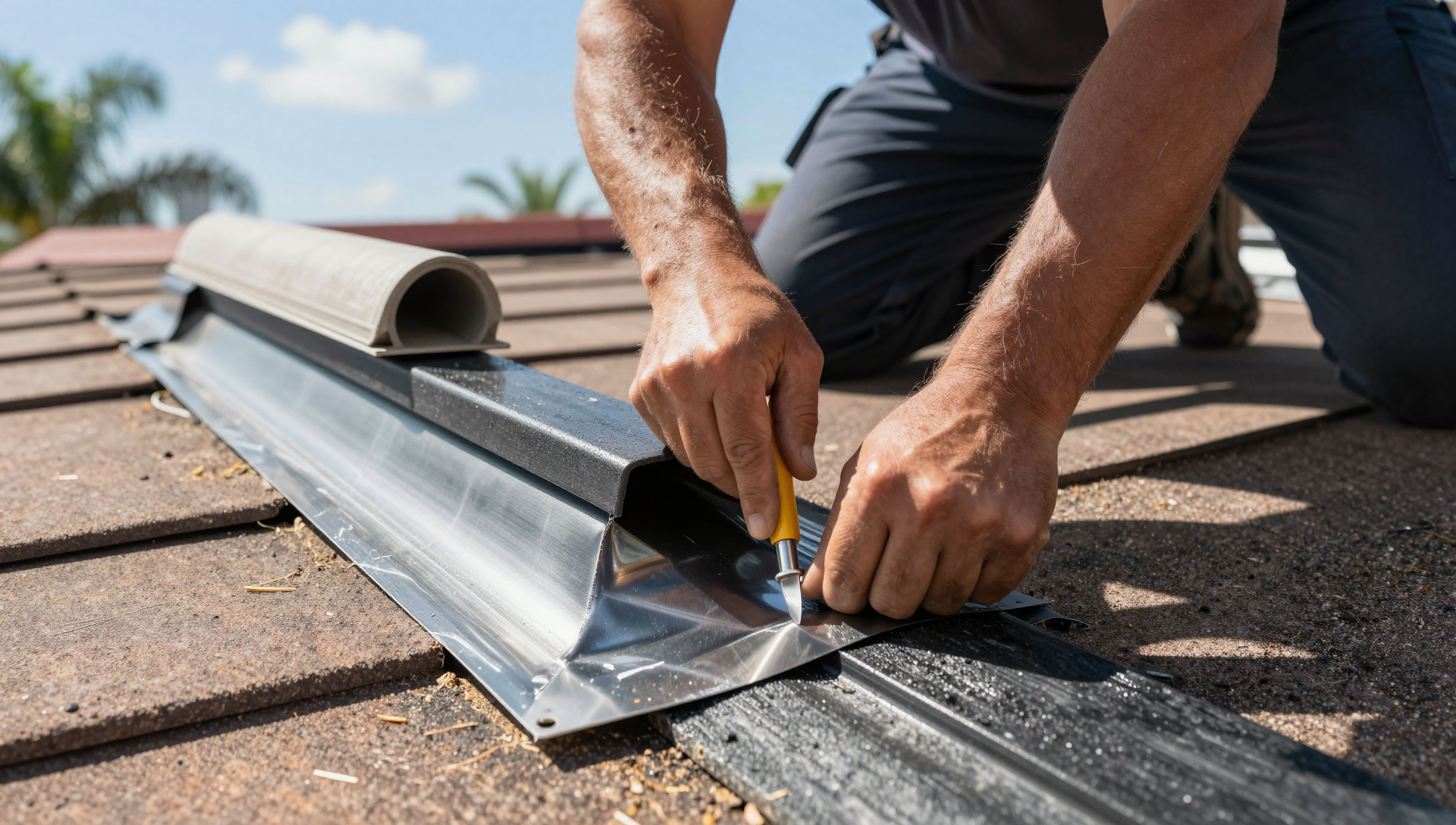
A localized membrane, seam or flashing defect can often be repaired when surrounding materials remain in good condition. Replacement becomes more relevant when membrane deterioration is widespread, drainage is fundamentally compromised, moisture affects large areas or repair history shows recurring failure.
Cost discussions should focus on the condition and scope rather than invented price ranges. A written estimate can explain which components are being repaired and what evidence supports the recommendation. For residential additions and low-slope sections, residential roof repair guidance can help keep the scope matched to the property.
Roof-system checkpoints
- Membrane type
- Seams
- Drains and scuppers
- Penetrations
Maintaining Low-Slope Roofing
Keep drains and scuppers clear, coordinate rooftop equipment work carefully and address punctures, flashing deterioration and visible seam problems promptly. Record unusual ponding after heavy rainfall so recurring patterns can be investigated.
Maintenance is especially useful for flat roofs because small drainage or membrane defects can be hard to notice from the ground.
Field Notes That Can Improve the Diagnosis
A flat-roof repair decision becomes clearer when the roof history is considered alongside the present defect. Repeated patching in the same area may mean the original leak source was never isolated, but it can also indicate that a wider membrane or drainage condition is developing. A roof with one clean puncture and healthy surrounding membrane is a different project from a system with multiple aging seams, saturated insulation and recurring ponding. For businesses, service records from HVAC contractors and other rooftop trades can be particularly useful. Equipment work can introduce new penetrations or traffic patterns that correlate with later leaks. For residential low-slope sections, note whether water appears after intense downpours or smaller rain events. These observations can guide the inspection without turning assumptions into conclusions.
Repair or Replacement: How the Roof-System Decision Changes
| Condition | Typical finding | Likely direction |
|---|---|---|
| Localized membrane defect | Seam, puncture or flashing issue | Targeted membrane/detail repair |
| Drainage problem | Blocked drain/scupper or recurring low area | Drainage correction + roof assessment |
| Widespread membrane aging | Repeated leaks across the system | Replacement assessment |
A Flat-Roof Repair Evaluation
Identify the membrane
Determine whether the roof uses TPO, EPDM, modified bitumen or another low-slope system.
Map water movement
Inspect seams, penetrations, flashing, drains, scuppers and likely migration paths.
Define repair limits
Separate a localized defect from broader membrane, moisture or drainage problems.
Restore system function
Complete a compatible membrane or detail repair and review the surrounding water-shedding path.
Orlando and Central Florida Roof-System Considerations
Heavy seasonal rainfall makes drainage important on low-slope roofs. Drains, scuppers, seams and penetrations deserve particular attention when a flat roof develops a leak or recurring ponding.
Roof Repair Orlando FL operates from 6530 Swissco Dr #1117, Orlando, FL 32822 and uses the same business identity for service-area work. Written estimates and a 10-year written workmanship warranty are approved business claims. We also serve homeowners in Lake Nona, Baldwin Park.
Verified business information
- Roof Repair Orlando FL
- CCC1327217
- (689) 282-5370
- Serving since 2001
View Roof Repair Orlando FL on Google Maps
This verified map identifies the business location used for the service pages. These pages do not represent separate branches.
Practical Guidance Before the Repair Begins
Before a flat-roof repair begins, the most important scope question is whether the problem is local or systemic. A single puncture in an otherwise sound membrane is very different from recurring leaks along several seams or repeated ponding caused by a drainage limitation. TPO, EPDM and modified bitumen also have different repair requirements, so identifying the membrane before choosing materials is essential. For property managers, the roof history can be especially informative. Recent HVAC work, service traffic, previous patches, drain cleaning and recurring interior stains can reveal patterns that are not obvious during a single walkover. A written estimate should distinguish confirmed defects from conditions that remain inaccessible beneath the membrane or insulation. That makes the repair recommendation easier to evaluate and helps prevent repeated spot work that does not solve the underlying issue.
Why Repair Scope Matters on This Roof System
The repair boundary on a membrane roof should also account for transitions. A defect may sit near a parapet, equipment curb, drain or other detail where the membrane and flashing interact. Those interfaces are often more important to diagnose than the largest visible area of water staining. When a patch has already been attempted, its condition and location are useful evidence during the next inspection. A good report should also identify whether the recommended work is a leak repair, preventive maintenance, localized membrane restoration or a broader replacement project. Clear naming helps property owners compare the proposed scope with the roof's history and reduces the chance of repeatedly paying for patches that do not resolve a recurring condition.
Roof-System Questions Homeowners Ask
What causes ponding water on a flat roof?
Ponding can result from blocked drains or scuppers, low areas, drainage limitations or changes in the roof surface. The underlying cause should be identified rather than assuming ponding is simply a membrane leak.
How are TPO and EPDM roof leaks repaired?
The repair depends on the membrane type and the exact defect. TPO and EPDM use different materials and techniques, so the system should be identified before a patch or seam repair is selected.
Can a flat roof leak be repaired without replacing the whole roof?
Often. Isolated punctures, seam issues or flashing failures can be candidates for repair when the surrounding membrane and substrate remain serviceable.
Why can a flat-roof leak appear far from the actual entry point?
Water can travel along the membrane, insulation, deck or framing before reaching the interior. The visible ceiling stain is not always directly below the exterior defect.
What should be checked besides the membrane?
A useful assessment considers seams, flashing, penetrations, drains, scuppers, roof edges and visible evidence of moisture beneath the membrane.
Do HVAC units affect flat-roof repairs?
They can. HVAC curbs and service paths create penetrations and traffic areas that may contribute to leaks. Those interfaces should be included in diagnosis.
Are residential low-slope roofs repaired the same way as commercial flat roofs?
The diagnostic principles overlap, but the membrane, roof size, access, drainage and building use may differ. The repair scope should match the actual roof system.
When should a flat roof be replaced instead of repaired?
Replacement is more relevant when deterioration is widespread, drainage problems are systemic, moisture affects large areas or repeated repairs are no longer resolving the underlying issue.
Compare Roof Repair by System
These related resources help when the next decision depends on the roof system, leak type, or broader property context.
Need the Right Repair for Your Flat Roof?
Describe the problem you are seeing and request the roof-system-specific service that fits your property. You can also call the Orlando team directly.