How To File A Roof Insurance Claim In Florida
A step-by-step guide from a licensed Orlando roofing contractor. We walk Florida homeowners through every stage of the roof insurance claim process, from documenting storm damage to getting a fair settlement, without the confusion.
Filing a roof insurance claim in Florida is not always a simple process. Between Florida's hurricane season, the volume of claims insurers handle after major storms, and the complexity of policies with separate wind and hurricane deductibles, a lot of homeowners either leave money on the table or have claims denied altogether.
We have been repairing roofs across Orlando and Central Florida since 2001. Over that time, we have helped hundreds of homeowners navigate Florida roof insurance claims after hurricanes, tropical storms, and severe wind events. This guide reflects what we actually see on the ground, not what an insurance company brochure tells you to do.
Follow these steps carefully. The difference between a full roof repair covered by your insurer and a frustrating denial is almost always documentation, timing, and knowing what adjusters actually look for.
📋 What This Guide Covers
- Inspect Roof Damage Safely
- Document Storm or Leak Damage
- Contact Your Insurance Company
- Schedule a Roof Inspection
- Meet the Insurance Adjuster
- Understand Your Insurance Estimate
- Emergency Roof Tarping and Temporary Repairs
- Choosing a Roofing Contractor
- Filing Supplemental Claims
- Avoiding Common Insurance Claim Mistakes
- What Florida Homeowners Should Know About Deductibles
- When Insurance May Deny a Roof Claim
Inspect Roof Damage Safely
🔍 Do This First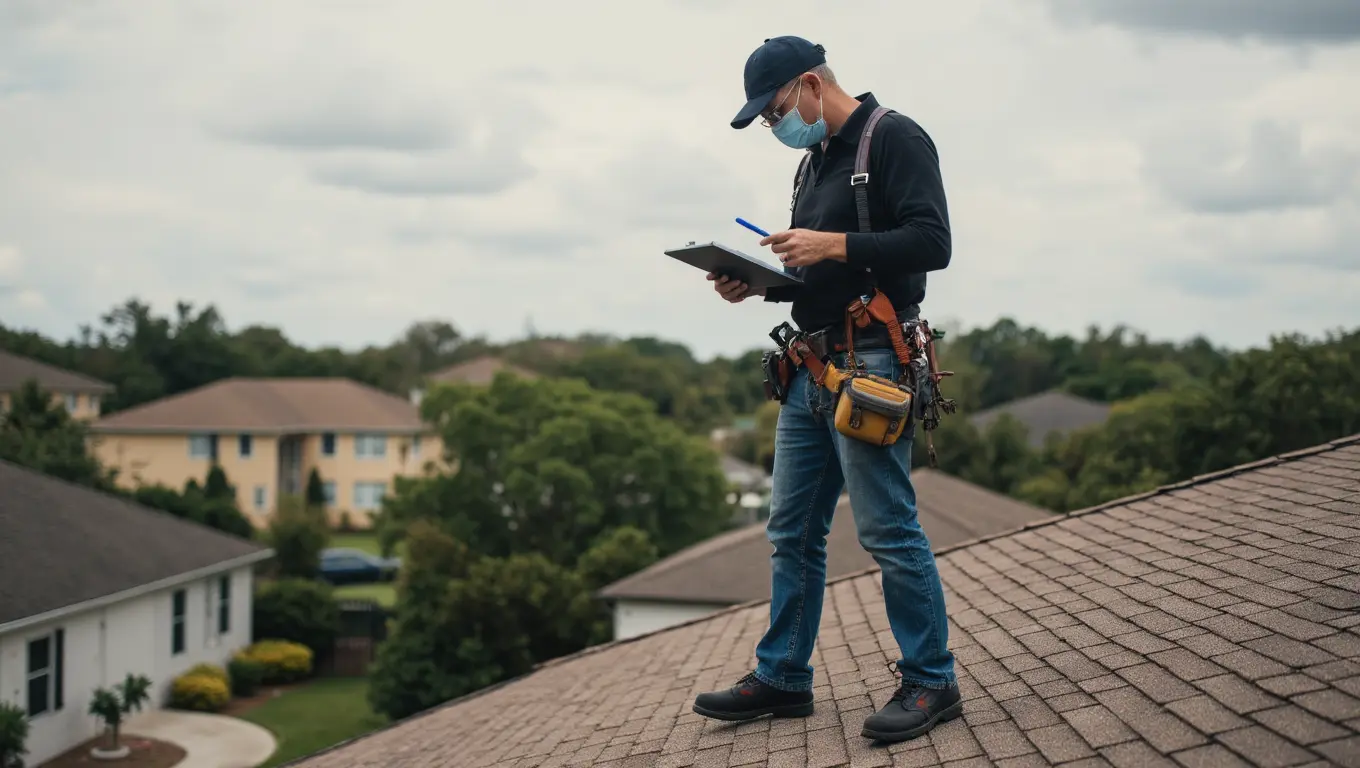
After a hurricane, tropical storm, or heavy wind event, your first instinct might be to get up on the roof and look around. Do not do that immediately. Wet roofing surfaces are extremely slick, and post-storm debris creates fall hazards that send homeowners to the emergency room every storm season in Florida.
Start from the ground. Walk the full perimeter of your home and look for obvious signs: missing shingles, cracked or dislodged tile, debris on the roof surface, damaged gutters or soffit, and any visible sagging. Then check inside your home for water stains on ceilings, musty smells near attic access points, and visible daylight through attic vents or seams.
If you need a closer look, contact a licensed roof inspector in Orlando before getting on the roof yourself. A professional inspection gives you documented findings with photos and a written report, which carries far more weight with an insurance adjuster than your own observations.
Document Storm or Leak Damage
📸 Critical Step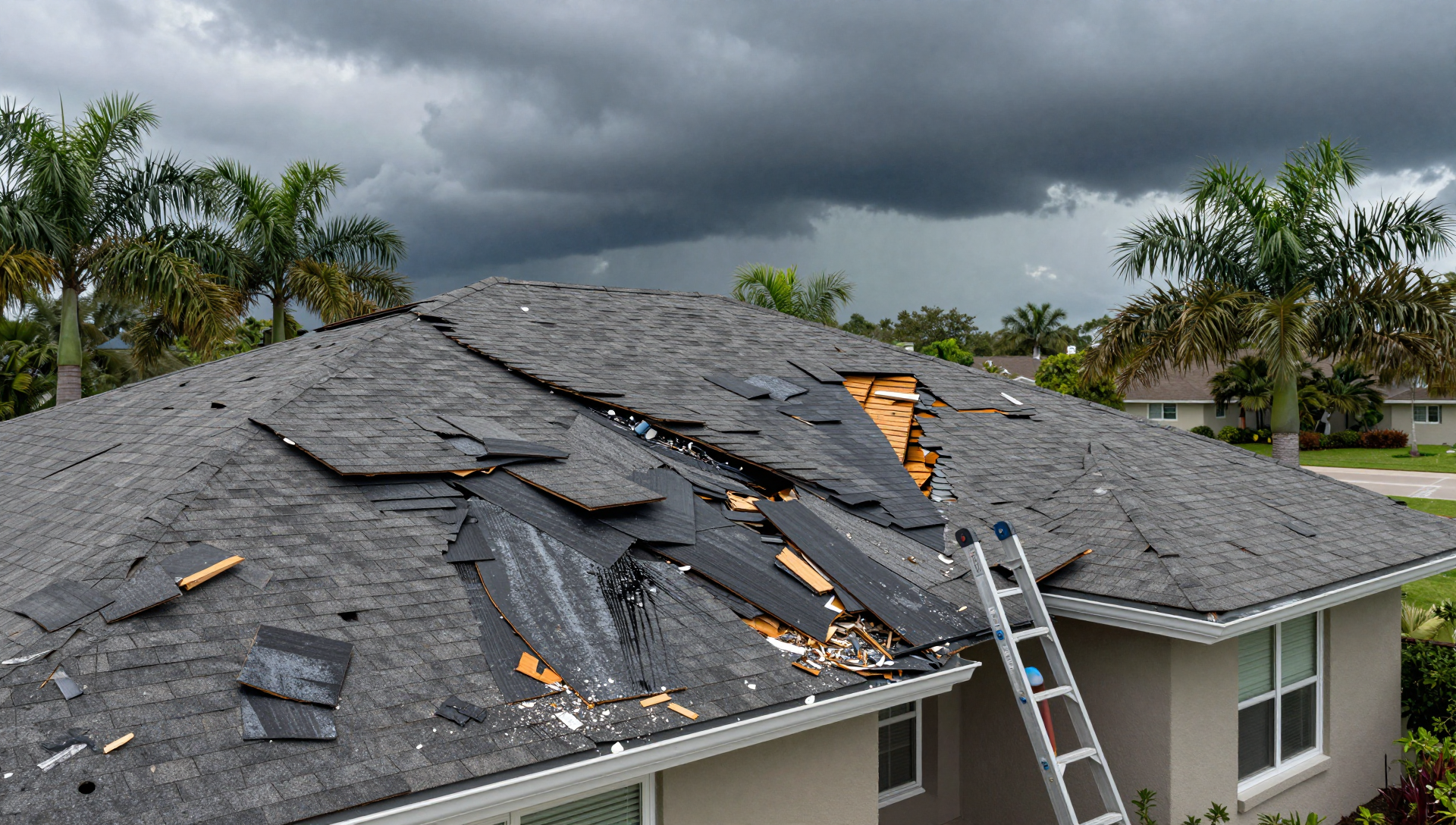
This is the step where most Florida homeowners make their first critical mistake. After major storms, many people delay documenting roof damage because they are focused on clearing debris, dealing with power outages, or simply waiting for the chaos to settle. Every day you wait weakens your insurance claim.
Document everything as soon as it is safe to do so. Take photos and video from every angle you can safely access. Photograph the damage from the ground, from windows, from second-story vantage points. If there is interior damage like ceiling stains or wet insulation, photograph that too. Note the date and time of every photo, and keep a written record of when the storm occurred and when you discovered each area of damage.
Documentation Checklist
- Photograph all visible exterior damage from ground level and from any safe elevated position
- Video walkthrough of roof damage with date and location narrated
- Photos of interior damage: ceiling stains, wet insulation, damaged drywall
- Screenshot or printout of local weather service data confirming the storm event
- Written notes with dates, times, and descriptions of each damage area
- Save all receipts for emergency supplies you purchase (tarps, buckets, fans)
- Document any temporary repairs you make before the adjuster arrives
The National Weather Service and Weather Underground both provide historical storm data by zip code. Screenshot or download the storm data for your area on the day of the event. Insurers sometimes challenge whether a storm was severe enough to cause roof damage, and having the official weather record ready removes that argument before it starts.
Contact Your Insurance Company
📞 Don't WaitOnce you have documented the damage, contact your insurance company to open a claim. Most major insurers have 24-hour claim hotlines, and many now allow claims to be filed through a mobile app or online portal. However you file, get a claim number immediately and write it down along with the name of the representative you spoke with and the date and time of the call.
Florida law requires homeowners insurers to acknowledge a claim within 14 days and to pay or deny within 90 days. However, after major hurricanes that affect large areas, those timelines can stretch. Filing early puts you near the front of the queue and gives you more leverage if timelines are not met.
After major Florida hurricanes like Ian, Irma, and Milton, some insurers receive tens of thousands of claims within days. Homeowners who wait weeks to file often find that adjusters are backed up, contractors are booked out, and the repair timeline extends dramatically. File your claim within 24 to 48 hours of the storm, even if you have not completed your full documentation. You can supplement the claim with additional documentation later.
During the initial call, be clear and factual. Describe the storm event, the date it occurred, and the type of damage you observed. Do not speculate about causes or downplay the damage. Ask specifically about your hurricane deductible vs. your standard wind deductible, since Florida policies often treat these differently and the deductible amount can be substantially higher for named storms.
Need a Documented Inspection Report?
Our licensed Orlando team provides professional roof inspections with detailed written reports and photos, the kind of documentation that insurance adjusters take seriously. Completely free, no obligation.
Schedule a Roof Inspection
🔧 Before the Adjuster Arrives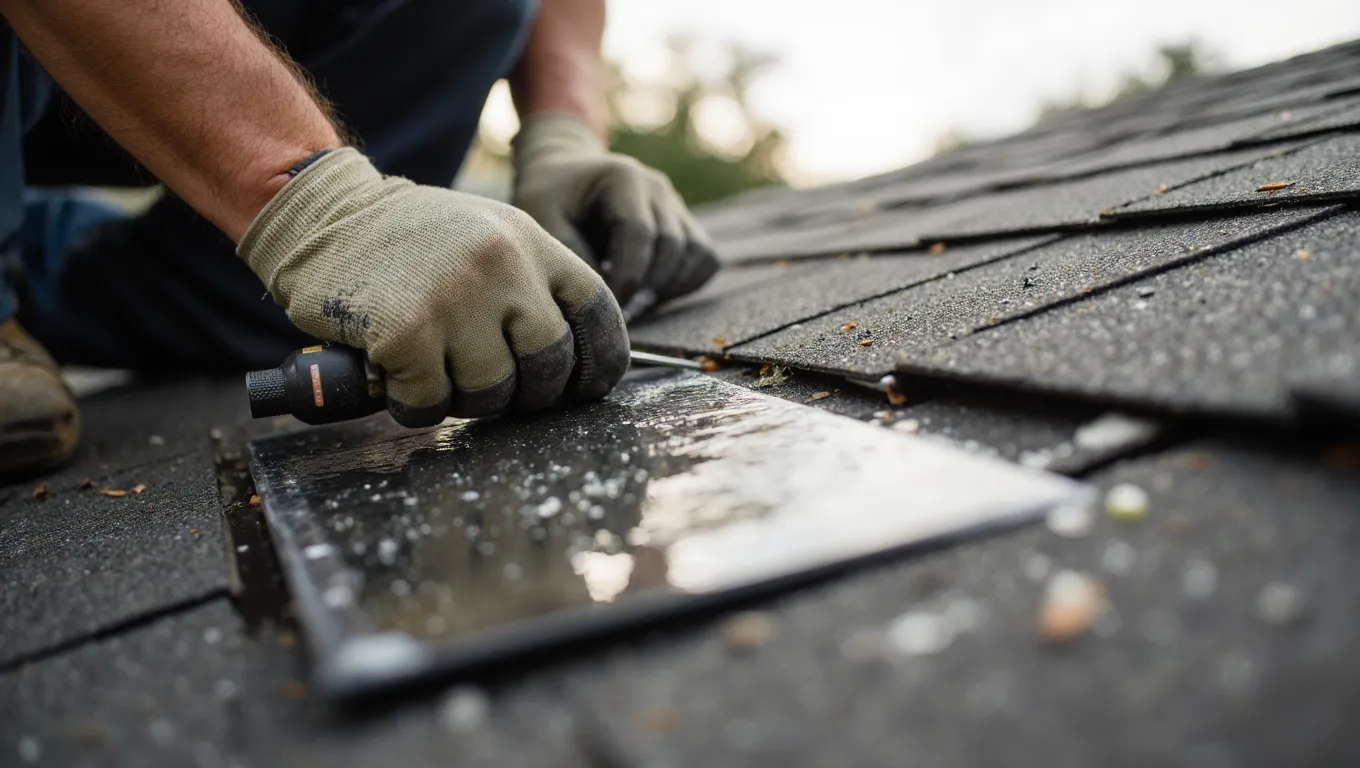
Here is something most homeowners do not know: you are not required to wait for the insurance adjuster before having a licensed roofing contractor inspect your roof. In fact, getting an independent contractor inspection before the adjuster arrives is one of the most effective things you can do for your claim.
A contractor inspection gives you an independent assessment of the damage with its own documentation. If the adjuster misses items or undervalues repairs, you have a professional opinion ready to challenge the estimate. We offer free roof inspections across Orlando and Central Florida, and we provide a detailed written report you can share with your insurer.
A thorough pre-claim inspection should document shingle condition and age, flashing integrity, decking condition, soffit and fascia damage, gutter damage, vent and seal condition, and any interior signs of water intrusion. Photos should include close-ups of each damage point and wide-angle shots showing location context. This level of detail gives you a strong foundation if you need to dispute the adjuster's findings.
Meet the Insurance Adjuster
🤝 Be PreparedWhen the insurance adjuster arrives, you want to be ready. Have your documentation organized, your claim number handy, and ideally your contractor on site or available by phone. Adjusters are generally not trying to deny your claim unfairly, but they work through a large volume of inspections quickly, and they will not spend extra time looking for damage you have not pointed out.
Walk the adjuster through every area of damage you documented. Point out the interior stains, the missing shingles, the lifted flashing around the chimney. If you had a contractor inspection done, share that report. Do not be confrontational, but do not be passive either. Your job at this stage is to make sure nothing gets missed.
What Adjusters Look For on Roof Inspections
- Storm-related impact damage to shingles: bruising, fractures, granule displacement in circular patterns
- Wind damage: lifted, torn, or missing shingles in consistent directional patterns
- Flashing damage around penetrations: chimneys, vents, skylights, valleys
- Fascia, soffit, and gutter damage from wind or debris impact
- Decking damage visible through damaged shingle areas
- Interior water damage that correlates with exterior roof damage
- Damage to ridge caps and hip caps, often missed on quick visual inspections
Understand Your Insurance Estimate
📄 Read This CarefullyAfter the adjuster's visit, your insurer will send an estimate detailing what they will pay for. This document is often several pages long and uses roofing industry software like Xactimate to price each line item. Most homeowners see a number at the bottom and either accept it or feel overwhelmed trying to understand it.
Take the time to go through it line by line. Compare it to the contractor inspection report you received. Common areas where insurance estimates come in low include: missing items entirely (like damaged ridge caps or soffit sections), using depreciated values for materials that a licensed contractor will need to replace at current market cost, and underestimating the labor required for tile roof repairs versus shingle.
Many Florida homeowners policies pay out at Actual Cash Value initially, meaning they depreciate the age of your roof when calculating the payment. If your policy includes Replacement Cost Value coverage, you can recover the depreciated amount after repairs are completed and you submit receipts. Make sure you understand which type of coverage your policy has before accepting a settlement.
Emergency Roof Tarping and Temporary Repairs
🛡️ Protect Your Home Now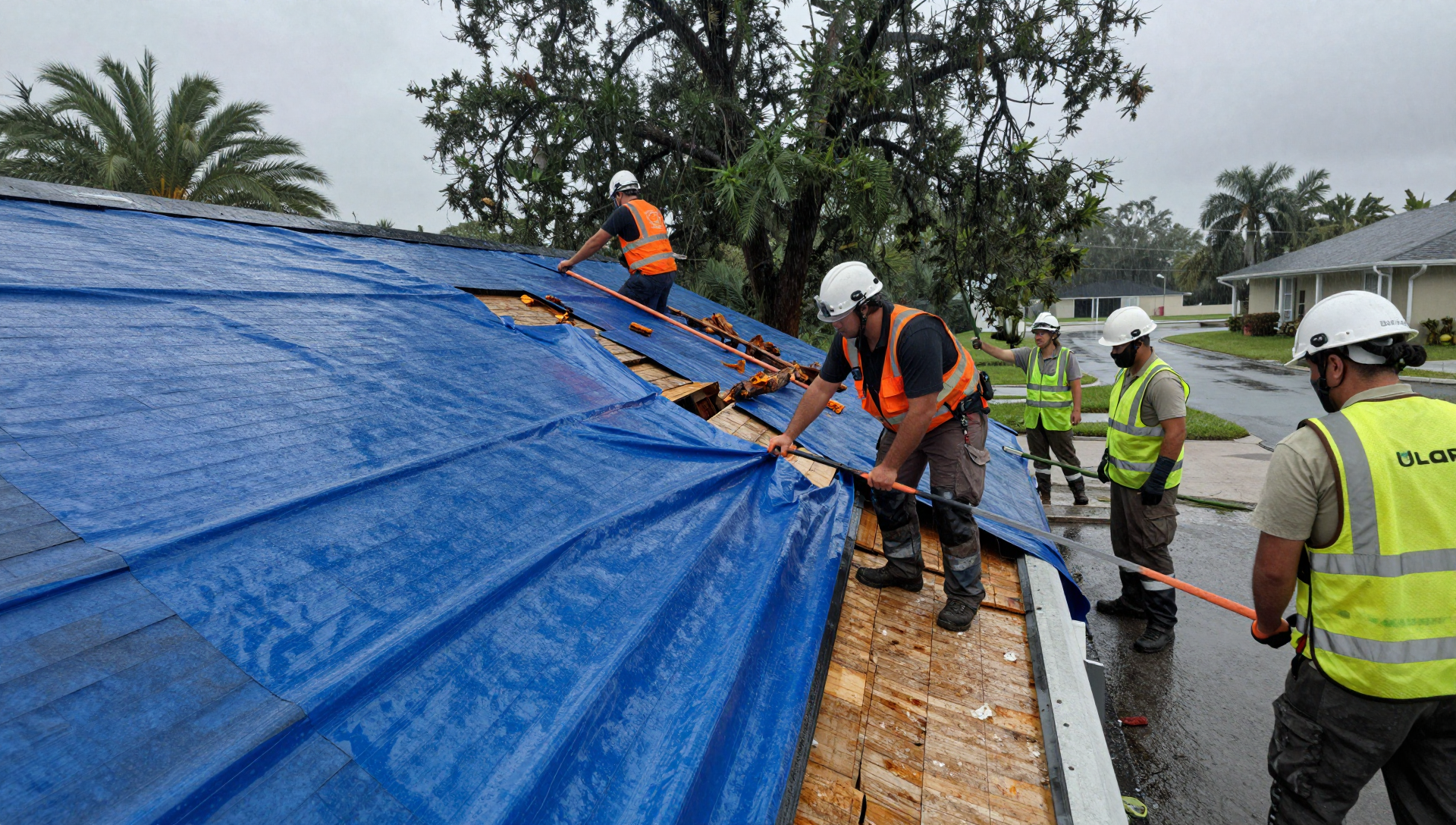
Florida homeowners have a legal obligation under most insurance policies to take reasonable steps to prevent further damage to their home after a storm. This is called your duty to mitigate. If you have open roof damage and a rainstorm moves through two days later, any additional water damage that enters through the unprotected area may be excluded from your claim.
Emergency roof tarping stops that problem. A properly installed tarp, secured at the ridge and with weighted edges, can protect your home through multiple additional rain events while the formal claim and repair process moves forward. Our team provides 24/7 emergency roof tarping and temporary repairs across Central Florida, often on the same day as the call.
Keep receipts for any emergency materials you purchase and photograph the tarping or temporary repair work before and after installation. Most Florida policies reimburse reasonable emergency mitigation costs. Include these receipts in your claim documentation. Do not let the insurer tell you these costs are not covered without reviewing your policy's mitigation provisions first.
Choosing a Roofing Contractor
👷 Licensed and Local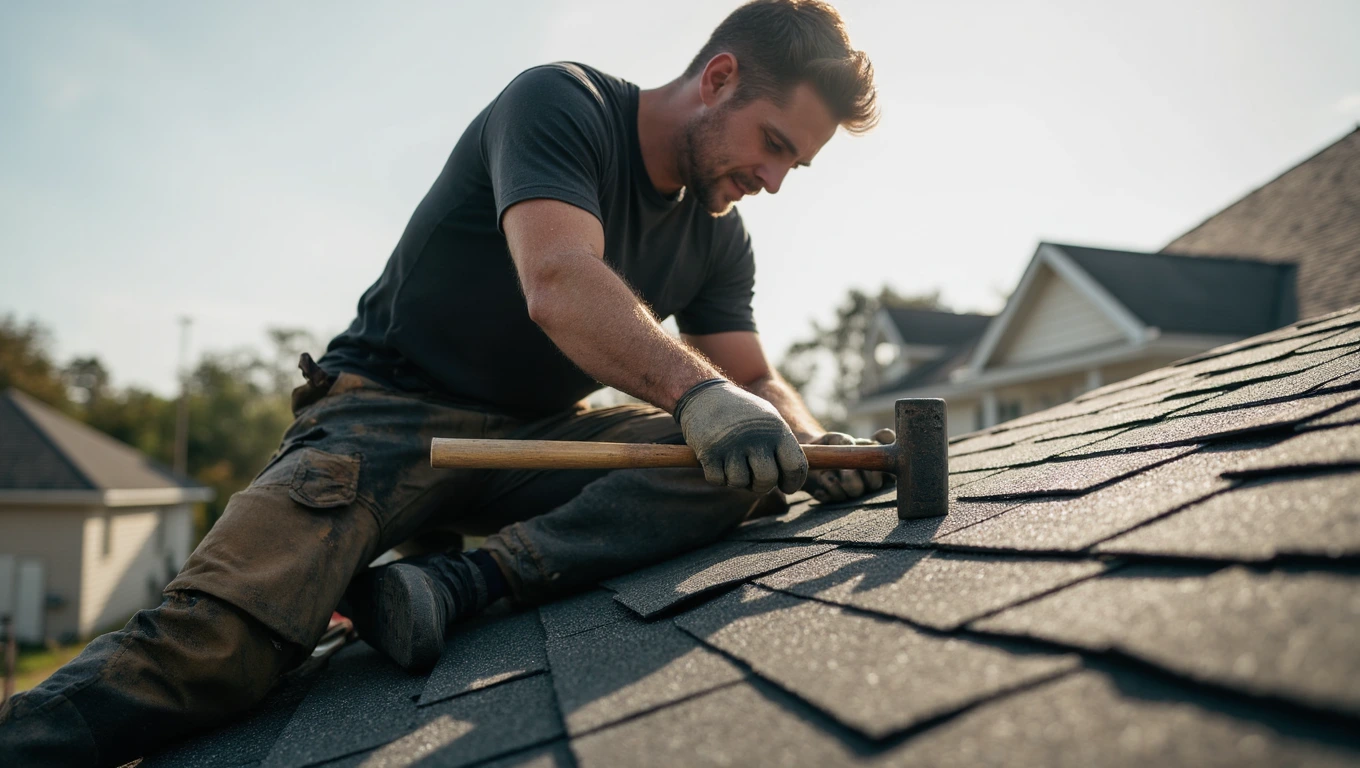
After a major Florida storm, out-of-state roofing crews flood into Central Florida chasing insurance work. Some of these contractors are legitimate and experienced. Many are not. Choosing the wrong contractor after a storm claim is one of the most common and costly mistakes Florida homeowners make.
Florida requires roofing contractors to hold a state license for roofing work. For repair work covered by an insurance claim, your contractor should hold a Florida Roofing Contractor license (RC or CCC designation) and carry both general liability and workers compensation insurance. Ask to see proof of both before signing anything.
How to Vet a Roofing Contractor in Florida
- Verify their Florida state roofing license at the DBPR website (floridadbpr.com)
- Request a certificate of insurance showing GL and workers comp coverage
- Check Google reviews, the BBB, and Angi for local reputation and project history
- Ask how long they have operated in Central Florida and for local references
- Get a written, itemized estimate before any work begins
- Never pay more than 10% or $1,000 (whichever is less) as a deposit before work starts
- Avoid any contractor who asks you to sign over your insurance claim rights (Assignment of Benefits)
Storm Damage? We Help With the Claim Process.
Our Orlando team is licensed (CCC1327217), insured, and experienced with Florida insurance claims. We provide detailed inspection reports, work directly with adjusters, and never ask you to sign over your claim rights.
Filing Supplemental Claims
💰 Get What You're OwedA supplemental claim is filed when additional damage is discovered during repairs that was not included in the original insurance estimate. This happens more often than most homeowners realize. When a contractor tears off damaged shingles, they frequently find deteriorated decking, damaged felt paper, or compromised flashing that was not visible during the adjuster's inspection.
When this happens, work stops, additional photos and documentation are taken, and a supplemental claim is submitted to the insurer. Most insurers have a process for handling supplements, and legitimate additional damage is generally covered. The key is documentation: photos before the damaged material is removed, written notes on scope, and a revised contractor estimate.
Under Florida statute, homeowners generally have two years from the date of a hurricane loss to complete and close a claim. This means that if additional damage surfaces during repairs, you are not necessarily time-barred from pursuing it. However, the sooner you identify and document supplemental damage, the cleaner your claim process will be.
Avoiding Common Insurance Claim Mistakes
⚠️ Learn From TheseAfter handling roof insurance claims alongside Florida homeowners for over two decades, we have seen the same mistakes repeat themselves after every major storm. These are the most costly ones to avoid.
Waiting Too Long to File
Florida law requires you to file within a reasonable time after a loss. After major storms, insurers become backlogged and contractors book out weeks in advance. Filing within 48 hours puts you ahead of the wave and keeps your timeline manageable.
Not Documenting Before Temporary Repairs
Many homeowners put a tarp up or patch a hole before taking any photos. If there is no documentation of the original damage, the insurer has only your word for what the roof looked like before the repair. Always photograph first, repair second.
Hiring an Unlicensed Contractor
Work performed by an unlicensed contractor can void your insurance coverage on that portion of the repair. Always verify Florida licensing before any work begins. Our license number is CCC1327217 and can be verified at floridadbpr.com.
Accepting the First Estimate Without Review
Insurance estimates are sometimes low on the first pass, especially after large storm events where adjusters are processing claims quickly. Always compare the adjuster's estimate to a licensed contractor's independent quote before accepting a settlement.
Ignoring Hidden Roof Leaks After a Storm
Not all storm damage shows up as a dramatic hole or missing section. Slow leaks through compromised flashing or hairline shingle fractures can take months to appear inside the home. A post-storm inspection catches these before they become expensive interior water damage claims.
Skipping Emergency Mitigation
If you leave an open roof unprotected through additional rain events and your home sustains further interior water damage, your insurer may deny that portion of the claim on the grounds that you failed your duty to mitigate. Tarping is cheap compared to the cost of denied coverage.
What Florida Homeowners Should Know About Deductibles
💵 Know Your NumbersFlorida homeowners insurance policies almost universally have separate deductibles for hurricane damage and standard wind/storm damage. Your hurricane deductible is typically calculated as a percentage of your home's insured value, commonly 2% to 5%, rather than a flat dollar amount.
On a home insured for $350,000 with a 2% hurricane deductible, you would owe $7,000 out of pocket before your insurer pays a single dollar. For many Florida homeowners, this comes as a genuine shock at claim time, especially after a named storm event that activates the hurricane deductible rather than the lower standard deductible.
Your hurricane deductible only applies when damage is caused by a named tropical storm or hurricane as declared by the National Hurricane Center. Damage from a severe unnamed thunderstorm, tornado, or regular wind event typically falls under your standard deductible, which is usually a flat dollar amount. Understanding which deductible applies to your claim can significantly change your out-of-pocket cost. Review your Declarations Page and ask your insurer directly which deductible applies to your specific event.
When Insurance May Deny a Roof Claim
🚫 Know Your Rights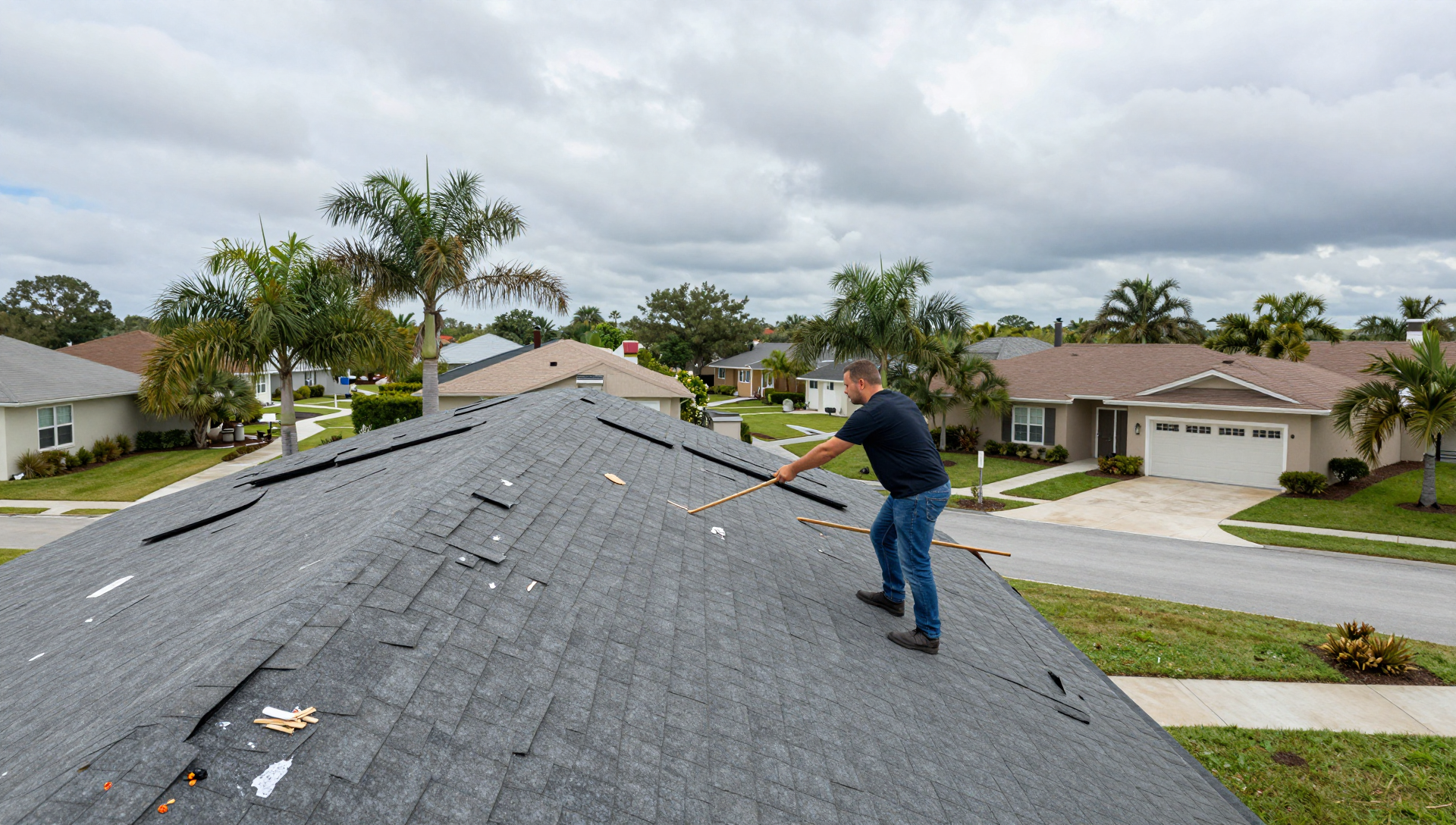
Roof insurance claims in Florida get denied for several common reasons. Understanding them ahead of time helps you avoid the situations that lead to denials and gives you a stronger position if you need to appeal.
Pre-existing damage or lack of maintenance: If your roof shows signs of deferred maintenance, such as old sealant failures, algae growth across the full surface, or wear that predates the storm, the insurer may attribute the damage to normal aging rather than the storm event. Regular documented maintenance helps establish that your roof was in good condition before the loss.
Roof age: Some Florida policies limit coverage on roofs over a certain age, typically 15 to 20 years for asphalt shingle roofs. Review your policy's roof age provisions before filing, and ask your contractor to document the condition of the roof in relation to its age.
Late filing: Florida law requires you to file within a reasonable period after the loss. Waiting months after a storm to open a claim gives the insurer grounds to question whether the damage actually occurred in the storm you are claiming.
Policy exclusions: Flood damage is not covered by standard homeowners policies and requires separate flood insurance through the NFIP. Wind-driven rain that enters through an existing opening (like an open window) rather than storm-created damage is sometimes excluded as well. Read your policy exclusions carefully.
A claim denial is not necessarily final. You can request a re-inspection, submit additional documentation, hire a public adjuster to advocate on your behalf, or file a complaint with the Florida Department of Financial Services. In some cases, an attorney specializing in insurance disputes can recover additional compensation. Do not accept a denial without understanding your full appeal rights.
The Bottom Line for Florida Homeowners
Filing a roof insurance claim in Florida is manageable when you approach it systematically. Document early, file quickly, get an independent inspection before the adjuster arrives, and never accept the first estimate without comparing it against a licensed contractor's independent assessment.
The Florida insurance market is complicated and has been under significant stress after recent hurricane seasons. Homeowners who know the process and document their damage thoroughly get significantly better outcomes than those who leave it entirely in the insurer's hands.
If you are dealing with storm roof damage anywhere in Central Florida, our team is available around the clock. We offer free inspections with detailed written reports, provide emergency tarping to protect your home, and work alongside you throughout the claims process. We are licensed, insured, and have been repairing Orlando-area roofs since 2001.
Roof Insurance FAQs for Florida Homeowners
Common questions we hear from Orlando and Central Florida homeowners filing roof insurance claims after storms and hurricanes.
Most standard Florida homeowners policies cover roof damage caused by wind, hail, falling objects, and storm events. Coverage for damage caused by flooding requires a separate flood insurance policy through the NFIP. Damage attributed to normal wear, age, or lack of maintenance is generally not covered. Reviewing your policy's specific roof coverage provisions before a storm occurs is always worthwhile.
Florida law generally gives homeowners two years from the date of a hurricane loss to file a claim and one year for non-hurricane wind losses, though your specific policy may have different provisions. Regardless of the legal window, filing within 24 to 48 hours of the storm is strongly recommended. Adjusters are more available, contractors are easier to book, and your documentation of the storm event is freshest.
It depends on what caused the leak. If the leak resulted from storm damage, a falling tree, or another covered event, yes, most policies will cover the roof leak repair and resulting interior damage. If the leak resulted from gradual deterioration, old age, or a failure you were aware of and did not repair, the claim is more likely to be denied. Documenting the connection between a storm event and a leak is essential for a successful roof insurance claim in Florida.
First, ensure everyone in the home is safe. Then document all visible damage with photos and video before touching anything. Contact your insurer to open a claim, and schedule a professional roof inspection to get an independent assessment before the adjuster arrives. If there are open areas in the roof, arrange for emergency tarping in Orlando to prevent further water intrusion. Keep all receipts for any emergency supplies or temporary repairs.
Yes, a licensed roofing contractor can provide significant assistance throughout the claim process. We provide detailed inspection reports with photos and damage assessments, meet with adjusters on site to point out damage, review the insurer's estimate and identify discrepancies, and handle supplemental claims when additional damage is found during repairs. We cannot act as your legal representative or negotiate settlements on your behalf, but we can arm you with the documentation and expertise you need to get a fair settlement.
A denial is not necessarily the end of the road. You can request a re-inspection with additional documentation, hire a licensed public adjuster to advocate for your claim, or file a complaint with the Florida Department of Financial Services. In cases involving significant damage, a Florida-licensed insurance dispute attorney can sometimes recover additional compensation. Do not accept a denial without requesting a written explanation of the specific reason and reviewing your appeal rights under your policy.
Yes, if your roof has open or exposed areas. Your policy almost certainly requires you to take reasonable steps to prevent further damage, and failing to do so can result in additional damage being excluded from your claim. Document the original damage thoroughly before installing the tarp, photograph the tarping installation itself, and keep your receipts. Most Florida policies reimburse reasonable emergency mitigation costs as part of the claim.
Spotted Storm Damage? Call Today.
We have helped Central Florida homeowners navigate roof insurance claims through hurricanes Ian, Irma, Milton, and dozens of tropical storm events. Our team provides free inspections, detailed reports, emergency tarping, and licensed repair work across Orange, Seminole, and Osceola County.