Emergency Roof Leak Repair Orlando
When water is entering a ceiling, wall, attic, or occupied space, the first job is to control the water pathway and understand where the roof is actually failing. This service page is for active leaks—not general roof upkeep or a routine roof inspection.
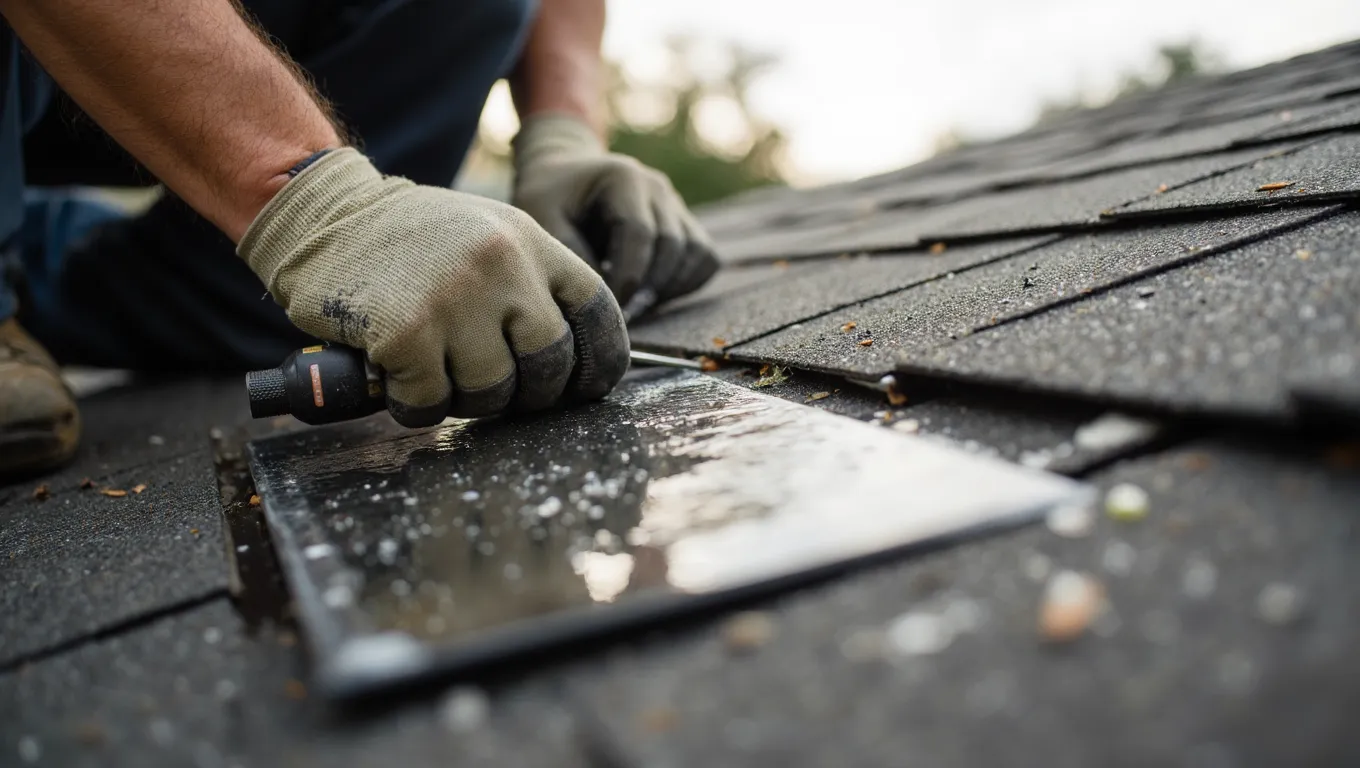
Quick Answer: Emergency Roof Leak Repair in Orlando
An active roof leak needs two things in the right order: control the immediate water pathway and identify the roof-system failure that caused it. Temporary stabilization can reduce exposure, but a lasting repair depends on finding the actual source.
What should I do when water is coming through the ceiling?
Move valuables away from the affected area, contain dripping water when safe, avoid wet electrical areas, and arrange emergency roof assistance.
Can an interior ceiling stain tell you where the roof is leaking?
Not reliably. Roof water can travel along framing, underlayment, insulation, or other surfaces before appearing inside.
What is the difference between emergency stabilization and permanent repair?
Stabilization is intended to reduce immediate exposure. Permanent repair addresses the failed roof component and restores the water-shedding system.
What commonly causes an active roof leak?
Possible sources include damaged shingles or tile, flashing failures, penetrations, valleys, seams, edge details, storm damage, or drainage problems.
Should a leaking roof be inspected even after the dripping stops?
Yes. A stopped leak only means the immediate water flow is no longer visible; the underlying failure may still be present.
Control the water pathway, then diagnose the failure
An active leak creates a different decision problem from a routine roofing repair. You are not simply asking whether a shingle should be replaced; you are trying to keep water from continuing to enter the building while the source is identified. Roof water can move away from the exterior breach before it becomes visible indoors, which is why a ceiling stain is evidence of a problem, not necessarily the location of the roof failure.
For an emergency roof leak in Orlando, the assessment should consider the condition of the visible roof covering and the details where water commonly changes direction: flashing, valleys, penetrations, pipe boots, roof-to-wall transitions, ridge areas, and other intersections. The response may be a direct repair when the failure is clear, or temporary roof leak protection when the weather or extent of damage makes immediate permanent work impractical.

What commonly turns a roof leak into an urgent call
Water entering living space
Drips, streams, wet drywall, or water appearing around a ceiling fixture signal that the roof system is no longer keeping water out. The goal is to stop the active pathway before more interior material becomes saturated.
Storm-opened roofing
Missing shingles, displaced tile, damaged ridge caps, or exposed roof deck can allow wind-driven rain to reach the underlayment or structure. Even a small opening deserves evaluation before the next rainfall.
Failure around a penetration
Pipe boots, vents, skylights, and other roof penetrations create joints that must shed water correctly. A failed seal or flashing detail can produce a persistent leak while much of the roof still looks normal.
- Active ceiling or wall water
- Exposed decking or daylight
- Storm-damaged roof covering
- Loose flashing or metal details
- Leak that worsens during rain
- Water appearing in an attic or upper level
A visible stain is a clue, not the whole diagnosis
Emergency leak detection works best when the roof and building are treated as one water-management system. The assessment starts from what is visible inside and outside, then works backward toward the likely entry point. Roof pitch, material, recent weather, age-related wear, and the location of the interior symptom all shape the inspection path.
On shingle roofs, the search may focus on damaged shingle courses, flashing, valleys, and penetrations. Tile systems require attention to cracked or displaced pieces and the waterproofing layers beneath them. Flat or low-slope roofs may shift the focus toward membrane seams, penetrations, drainage points, and areas where water can remain after rainfall. The objective is not to call every wet area a roof defect; it is to identify the roofing condition that best explains the observed intrusion.
What the emergency assessment is trying to answer
- Where is water most likely entering?
- Is the pathway still active?
- What roof component has failed?
- Can the area be safely repaired now?
- Is temporary stabilization needed?
- What permanent repair should follow?
Temporary stabilization versus permanent repair
| Situation | Likely priority | Why it matters |
|---|---|---|
| Small, clearly identified failure | Direct repair | Fixing the failed component quickly may stop the intrusion without unnecessary temporary measures. |
| Open or exposed roof area during wet weather | Tarping or temporary protection | Immediate coverage can reduce additional water entry until permanent work is practical. |
| Leak source still uncertain | Stabilize and investigate | Stopping the active pathway while tracing the source reduces the risk of repeatedly repairing the wrong spot. |
| Visible interior damage plus roof damage | Protect, document, then repair | Good documentation creates a clearer record of what was observed before conditions change. |
Why prompt action matters during Orlando rain
Orlando roofs are asked to manage intense sun, repeated rain, and seasonal storm events. The practical issue during an active leak is not the weather label; it is whether water can continue entering the building. Once a roof opening is exposed, each additional rainfall can extend the affected area.
Emergency roof leak repair therefore fits into a sequence: make the area safer, limit ongoing water intrusion, identify the likely failure, document the condition, and then complete the permanent repair. A storm-related leak may also connect to the broader storm and hurricane damage process. When the immediate leak is controlled but the roof's overall condition is unclear, a roof inspection can provide a broader assessment.
For homeowners and businesses
Residential emergency leaks often involve occupied spaces, ceilings, insulation, and personal property. Commercial leaks can also affect equipment, inventory, tenants, and business operations. The repair plan should reflect the property and roof system rather than using a one-size-fits-all response.
From emergency response to a durable fix
Call or submit the issue
Describe where water is entering, when it started, and whether the roof was recently exposed to wind or storm activity.
Stabilize the active pathway
When conditions call for it, temporary sealing or tarping can limit additional intrusion while the roof is assessed.
Trace the source
Inspect the roof system and likely failure points rather than assuming the interior stain aligns with the exterior breach.
Receive the repair scope
The next recommendation may be a targeted repair, further inspection, or a broader replacement discussion when the roof condition warrants it.
What you can expect from Roof Repair Orlando FL
Licensed contractor
Florida roofing license CCC1327217. The business operates from its Orlando address and serves Orlando and Central Florida.
Written estimate
The company uses written estimates so you can review the recommended work before deciding how to proceed.
10-year workmanship warranty
Qualifying repair work is backed by a written 10-year workmanship warranty according to the verified business information.
A simple checklist while you wait
Do
- Protect furniture and valuables from dripping water.
- Use containers for drips when it is safe to do so.
- Take photos of visible interior and exterior damage from safe locations.
- Note when the leak appears or worsens.
Do not
- Climb onto a wet or storm-damaged roof.
- Pull down a bulging ceiling yourself.
- Assume the ceiling stain is directly below the roof entry point.
- Delay an active leak because the roof surface looks mostly intact.
Where active roof leaks commonly begin
An active leak can come from a roof component that is not obvious from inside the room. Water may enter at a valley, flashing joint, pipe boot, vent, or damaged roofing surface and then travel horizontally or downhill before it reaches the ceiling. That is why a repair team should consider the route water is taking rather than simply applying sealant around the visible stain.
On a shingle roof, a single missing or lifted shingle can be the opening, but the assessment should also consider adjacent courses, underlayment, flashing, and the condition around penetrations. On tile roofs, a broken piece may be only the visible part of the problem. On low-slope roofs, the source may be connected to a membrane seam, penetration, drain, or area where water has remained after rain.
When the source is still uncertain, the best emergency plan can be a combination of temporary protection and methodical diagnosis. That avoids turning an urgent leak into a series of unrelated patches that never address the actual pathway.
Interior clues worth reporting
- Exact room or ceiling location of the water
- Whether the leak appears only during heavy rain
- Whether the water changes location or direction
- Any recent roof work or storm activity
- Musty odors or visible moisture near the affected area
- Whether the leak is worsening or spreading
Why the right first repair matters
An emergency leak is not always a hole that can be seen from the ground. A small failure can redirect water beneath a roof covering and along a deck or framing member. By the time water reaches a finished ceiling, the original entry point may be several feet away. That makes the diagnosis important even when the visible symptom looks small.
Roof details also behave differently under stress. Flashing has to manage transitions. Valleys collect and redirect runoff. Pipe boots seal around penetrations. Shingles and tile create the outer water-shedding layer, while underlayment provides another line of protection beneath the surface. A failure at one detail can compromise the building without obvious damage to everything around it.
For that reason, an emergency response should resist the temptation to treat the most convenient visible point as the complete answer. Stabilization, source tracing and documentation work together. Once the active pathway is controlled, the permanent repair can be chosen from a better understanding of the roof.
Information that improves the call
- Room where water is appearing
- Whether water only appears during rainfall
- Recent storm, wind or tree impact
- Known roof material
- Previous repair history
- Whether water is spreading to another area
Why an Active Leak Needs Source-Based Diagnosis
An interior water mark tells you that moisture reached the building; it does not automatically identify where the roof failed. During an active event, water can move laterally before appearing at a ceiling joint, around a light fixture, along a wall, or at a different point from the exterior opening. That is why emergency roof leak work starts with the relationship between the indoor symptom and the exterior roof assembly.
The investigation may consider flashing transitions, valleys, pipe boots, roof penetrations, shingle courses, tile interfaces, ridge areas, and other places where one component meets another. A roof can also have more than one contributing problem after heavy rain or wind. The objective is to distinguish the immediate path of water entry from secondary staining or moisture that traveled through the assembly.
For homeowners, the safest response is usually to protect people and belongings rather than climb onto the roof. From the ground, note where water is entering, when it started, whether it changes during rainfall, and whether new ceiling or wall areas are affected. For businesses, identify the occupied rooms, equipment, inventory, or access routes that could be affected so the emergency scope can address the most important exposure first.
Temporary protection and permanent repair are separate decisions. Tarping or temporary sealing can reduce exposure when weather or site conditions do not permit immediate permanent work. Once the roof can be evaluated safely, the repair scope should identify the failed component and any related deterioration. That distinction helps prevent a temporary measure from being mistaken for a completed roof repair.
Connect the Next Step to the Right Roofing Service
Use the related pages below to move from the information on this page to the service that matches the roof condition or project decision.
Emergency Roof Leak Repair FAQ
What should I do first when water is actively coming through the ceiling?
Move valuables away from the affected area, use a container under dripping water when safe, and stay away from wet electrical fixtures. Then arrange a professional assessment so the roof source can be stabilized.
Can the place where I see the drip be different from the leak source?
Yes. Water can travel along framing, underlayment, insulation and other building components before it appears on a ceiling or wall. The indoor stain is a clue, not necessarily the exterior entry point.
When does an active roof leak need emergency service?
An ongoing leak, exposed decking, a storm-created opening, or rapidly spreading water intrusion deserves prompt attention because additional interior and roof-system damage may occur.
Do you provide temporary roof leak protection?
Temporary tarping or sealing can be appropriate when immediate stabilization is needed before permanent work. The correct option depends on the roof, weather, access and extent of the damage.
Can a flashing failure cause a roof leak?
Yes. Flashing at roof-to-wall transitions, valleys, vents, skylights and other junctions can fail while the surrounding roofing material still appears serviceable.
What is the difference between stabilization and permanent repair?
Stabilization limits current water entry and protects the building. Permanent repair addresses the failed roof component or assembly so the water-shedding system can be restored.
Should I enter the attic during an active leak?
Only when access is clearly safe. Avoid wet areas near electrical components and do not put yourself at risk trying to locate the roof opening during an emergency.
Can emergency leak documentation help with an insurance claim?
Dated photos, written observations and a repair scope can provide useful records. Coverage decisions are made by the insurer, so documentation should describe the observed condition without promising claim approval.
Do you handle residential and commercial emergency leaks?
Yes. Residential leaks may involve shingles, tile, flashing or pipe boots, while commercial leaks can involve membranes, seams, penetrations and drainage.
What happens after temporary protection?
The roof should be assessed again to identify the leak source, related deterioration and the permanent repair scope. A written estimate can then distinguish immediate work from longer-term recommendations.
Emergency leak work has two goals: protect the building and restore the roof
Protect the occupied space
When water is moving into a finished room, the first concern is controlling the impact on people and property. Move furniture and electronics out of the affected area when possible, use containers for drips, and avoid wet fixtures or ceiling areas that could create an electrical or structural hazard. A roofing emergency is still a building-safety event, so interior precautions matter while the exterior condition is being assessed.
The location of the interior symptom also helps the inspection. Note whether the leak starts only during heavy rain, whether it changes direction, and whether the affected area has expanded since the first occurrence.
Stabilize the roof
Temporary protection can make sense when a roof has an open section, exposed deck, or weather condition that prevents immediate permanent repair. Tarping is not the same thing as a finished roof repair; it is a short-term way to limit additional water entry while the permanent scope is established.
On some roofs, a clear localized failure can be repaired directly. On others, especially after storm damage, stabilization buys time to assess nearby components and confirm whether more of the roof assembly is affected.
Restore the failed detail
The final objective is to repair the actual failure. That can mean replacing damaged shingles, correcting flashing, addressing a pipe boot, repairing a valley detail, sealing a penetration, or completing other roof-system work appropriate to the material. The permanent solution should follow the diagnosis rather than simply repeat the emergency measure.
Once the work is complete, a written estimate and warranty documentation give the owner a record of what was authorized and what workmanship coverage applies.
Why the right first repair matters
An emergency leak is not always a hole that can be seen from the ground. A small failure can redirect water beneath a roof covering and along a deck or framing member. By the time water reaches a finished ceiling, the original entry point may be several feet away. That makes the diagnosis important even when the visible symptom looks small.
Roof details also behave differently under stress. Flashing has to manage transitions. Valleys collect and redirect runoff. Pipe boots seal around penetrations. Shingles and tile create the outer water-shedding layer, while underlayment provides another line of protection beneath the surface. A failure at one detail can compromise the building without obvious damage to everything around it.
For that reason, an emergency response should resist the temptation to treat the most convenient visible point as the complete answer. Stabilization, source tracing and documentation work together. Once the active pathway is controlled, the permanent repair can be chosen from a better understanding of the roof.
Information that improves the call
- Room where water is appearing
- Whether water only appears during rainfall
- Recent storm, wind or tree impact
- Known roof material
- Previous repair history
- Whether water is spreading to another area
What Comes After Emergency Leak Response
Once the active leak is controlled, these pages cover the permanent repair options and related services that typically follow an emergency call.
Get Emergency Roof Leak Help Now
Roof Repair Orlando FL has served Orlando and Central Florida since 2001. Call (689) 282-5370 or request a written estimate. Our verified business address is 6530 Swissco Dr #1117, Orlando, FL 32822.
Find Roof Repair Orlando FL
Our business address is 6530 Swissco Dr #1117, Orlando, FL 32822. Use the map to confirm the location and get directions.
Florida License CCC1327217 · Serving Orlando & Central Florida · contact@roofrepairorlandofl.com