Hail Damage Roof Repair in Orlando, FL
Get a structured hail-damage assessment that documents visible conditions, identifies affected roof components and separates localized repairs from broader roof-system concerns.
Hail Damage Can Be Difficult to Judge From Ground Level
Hail can affect the roof covering, flashing, metal components and exterior drainage hardware. The correct response is an evidence-based inspection rather than assuming every storm produced roof damage.
Shingle impact
Look for localized impact patterns, granule loss or surface damage that should be assessed in the context of the entire shingle.
Tile impact
Clay and concrete tiles can crack or break. The surrounding underlayment and adjacent units also matter when defining repair scope.
Metal & exterior components
Flashings, gutters and downspouts can show impact evidence that adds context to a storm assessment.
What a Professional Hail Damage Assessment Looks At
Roof covering
Material condition, impact marks, cracking, displacement and other visible changes.
Flashings
Transitions, penetrations, edges and metal components that may also be affected.
Drainage
Gutters and downspouts can provide additional storm-impact clues.
Interior evidence
Ceiling stains or moisture can indicate a need to trace water entry.
Hail Damage: Evidence, Not Guesswork
A useful storm inspection documents what was observed and where. It should distinguish confirmed roof-system damage from conditions requiring further investigation. Ground-level photographs preserve visible conditions; professional assessment addresses what cannot be safely or reliably judged from the ground.
| Observation | Possible significance | Next step |
|---|---|---|
| Localized granule loss or impact marks | May warrant closer shingle inspection | Document and assess the affected slope. |
| Cracked tile | Possible water-shedding vulnerability | Inspect tile, underlayment and adjacent details. |
| Dented flashing or gutter | Storm-impact evidence | Compare with roof-area findings. |
| New ceiling stain | Possible water intrusion | Trace the entry pathway; do not assume the stain is directly under the source. |
What to Photograph After a Hail Event
Do not climb a damaged or slippery roof just to create evidence.
Repair, Stabilization or Replacement?
Localized impact damage may be repairable. Widespread damage or broader roof deterioration may justify a replacement assessment. Neither conclusion should be made from one visible mark alone; the roof system and repair boundary matter.
Hail Damage Roof Repair FAQs
How can I tell if hail damaged my roof?
Visible exterior signs can provide clues, but a professional assessment is more reliable for determining roof-system damage.
Can hail damage a roof without a visible hole?
Yes. Impact can affect shingles, tile or metal components without creating an obvious opening from the ground.
Is hail damage always a replacement?
No. Localized damage may be repairable; widespread damage or broader deterioration can change the decision.
Should I climb onto the roof to photograph hail damage?
No. Use safe ground-level photos unless the roof has been professionally assessed as safe to access.
Can hail damage lead to a later leak?
It can if the weather-shedding layer is compromised and subsequent rainfall reaches the affected area.
Can your inspection documentation support an insurance claim?
Inspection findings can document observed conditions. Coverage decisions remain with the policy and carrier.
Hail Damage: Evidence, Not Guesswork
Hail impact does not always create a dramatic opening. Granule loss, surface changes, cracking, tile damage and impact evidence on exterior metal can all be clues, but ordinary weathering can produce overlapping signs. The inspection should evaluate the pattern and the surrounding roof system rather than treat one mark as proof of whole-roof damage.
Shingles
Assess the affected shingle and surrounding field and distinguish impact evidence from general weathering.
Tile
Cracked or broken tile should be evaluated with adjacent units and the weatherproofing layer.
Exterior evidence
Dented gutters or flashing can add storm context but do not independently establish roof damage.
Hail Damage Inspection Matrix
| Observation | What it may indicate | Next step |
|---|---|---|
| Localized impact marks | Possible roof-covering impact | Inspect the affected slope and surrounding material. |
| Cracked tile | Impact or pre-existing break | Check adjacent units and underlayment context. |
| Dented flashing or gutter | Exterior impact evidence | Compare with roof-system findings. |
Hail Repair vs Replacement
Localized impact on an otherwise serviceable roof may fit targeted repair. Multiple affected roof slopes, widespread deterioration or an impractically broad repair boundary can justify a replacement assessment. Insurance coverage remains policy-specific; inspection documentation records conditions but does not guarantee a claim result.
Repair path
- Damage is localized.
- Surrounding roof remains serviceable.
- Compatible repair is practical.
Broader assessment
- Multiple areas are affected.
- Existing roof deterioration is widespread.
- Repair scope is becoming impractical.
Visual Hail Damage Guide


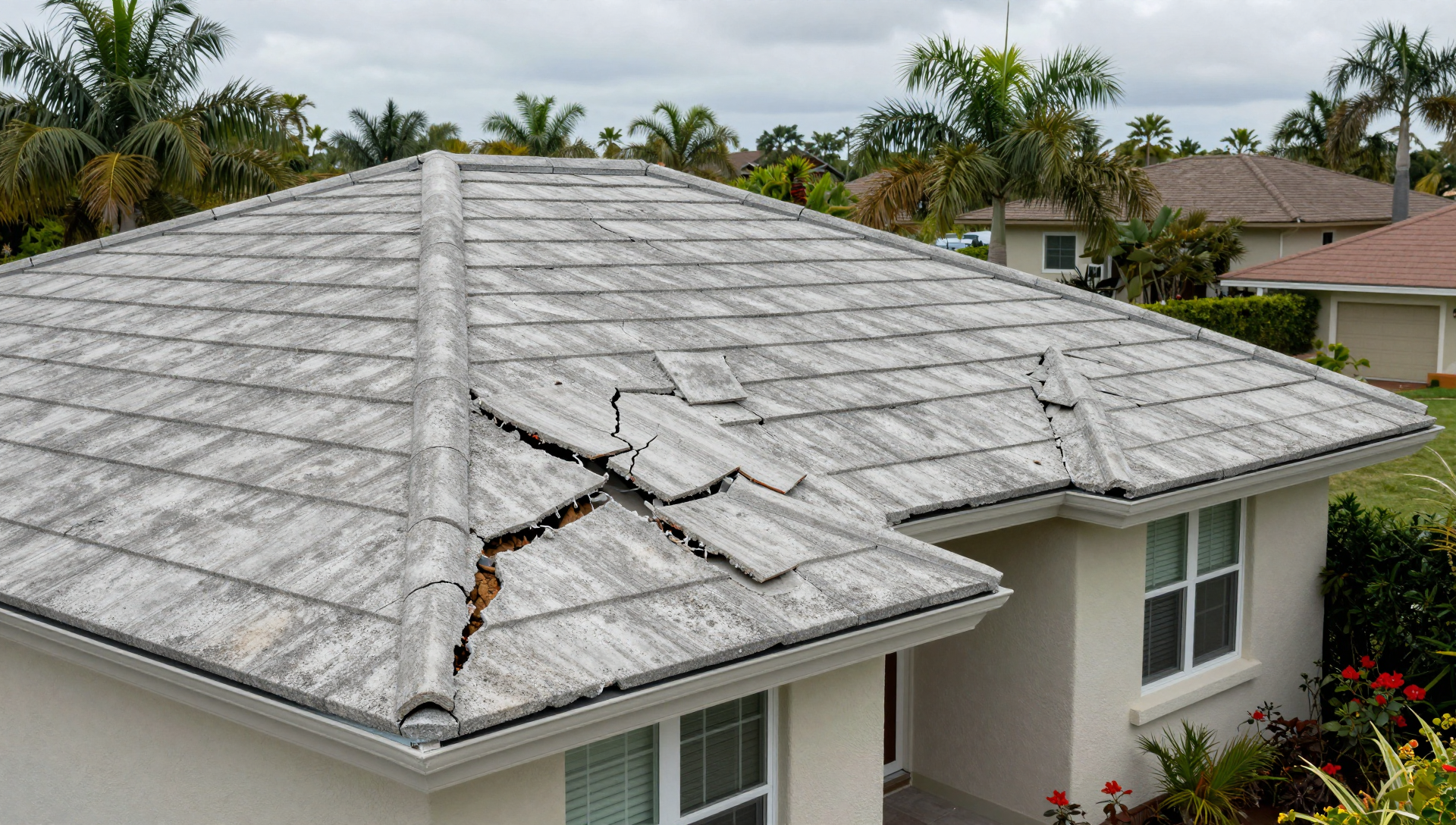
Record the storm date, visible exterior evidence, interior water entry and temporary protection. Keep photographs and written inspection findings together for the roof record.
Hail Damage Property-Owner Workflow
When a property owner suspects hail damage, the best workflow is to preserve evidence, understand the roof system, inspect affected areas and then define the repair boundary. This keeps the conversation tied to observable roof conditions rather than assumptions about storm severity.
1. Preserve what can be seen safely
Use ground-level photographs of roof slopes, gutters, downspouts, visible exterior metal and any interior stains. Note the date of the weather event and when any interior symptom appeared. Do not climb onto a roof simply to make a photograph.
2. Separate impact evidence from ordinary wear
Roof materials can change over time because of heat, UV exposure, moisture and normal weathering. A professional assessment should look for patterns that fit impact and compare them with the overall roof condition.
3. Inspect the entire affected area
A single visible mark does not define the whole repair. Nearby shingles, tile, flashing, ridge details, penetrations and drainage components can change the scope. The assessment should document both damaged and unaffected areas when that comparison matters to the decision.
4. Choose the smallest durable response
Localized damage on a serviceable roof may fit targeted repair. Widespread damage or an already deteriorated roof may justify a replacement assessment. The correct response should follow the roof condition rather than a generic storm script.
Hail Damage Service Playbook
A property owner who searches for hail damage repair usually needs three answers: is there evidence of damage, where is it located, and what practical response fits the roof condition? The page should answer those questions without assuming that every storm caused roof damage or that every observed mark requires replacement.
Preserve the condition
Use safe ground-level photographs, record the storm date and note any new interior water. Do not climb a wet roof simply to create evidence. Photos and inspection notes should be kept together before repairs disturb the condition.
Interpret the roof material
Shingles, tile, metal and low-slope systems can show different impact evidence. A cracked tile is not interpreted the same way as a shingle surface change, and a dented gutter does not prove the roof covering is damaged. The inspection should connect the finding to the actual roof assembly.
Define the repair boundary
Localized damage on an otherwise serviceable roof may fit a targeted repair. Multiple affected roof slopes, widespread deterioration or repeated failures can justify a broader condition assessment. The decision should be based on the roof, not only the weather event.
Insurance documentation
Inspection photographs and written observations can create useful records. Coverage, exclusions and claim outcomes remain policy and carrier questions. A contractor should not guarantee a claim result.
More Hail Damage FAQs
Can hail damage look like normal aging?
Some surface observations can overlap with normal weathering, so the pattern and surrounding condition matter.
Should I inspect gutters after hail?
Dented gutters can provide additional storm context, but they do not independently establish roof damage.
Can hail crack concrete tile?
Impact can crack or break tile. Adjacent units and underlying weatherproofing should also be evaluated.
What if there is no interior leak?
A roof can have storm-related component damage before water enters the building.
Suspect Hail Damage in Orlando?
Get the roof condition assessed before choosing between a localized repair and a larger project.